Showing posts with label the thirteen. Show all posts

Sunday, October 18, 2020

The Calendar and Zodiac of The Thirteen

This post is primarily for the benefit of me and my players. Knowing the calendar of your gameworld is honestly the kind of tedium that I think you don't really need to make a setting great, but I do also think it's fun. One of my best memories of the original Dishonored is just seeing all of their different months and remembering how cool it was that they went out of their way to make up new ones.

Besides, this is also an excuse to write a zodiac for my gameworld. This is way more relevant worldbuilding, in my opinion, because you can learn something new about your character by figuring out their star sign - even if they're not given to believe that kind of thing, you're learning that about them.

But a calendar is the foundation upon which we must build this worldbuilding McMansion, so let's get to it. Here's the calendar of the most prominent pantheon in my gameworld, the Thirteen.

Calendar of the Lastborn


This calendar begins with the end of the War of Ichor, a deific conflict that established them as the dominant pantheon in most circles. Loom, like our planet, has 365-day years, with each day being 24 hours (though it was different under the old sun). So omnipresent are the Thirteen that the months themselves are named for them. The months are, in the order they occur (which is alphabetical/youngest-to-oldest):

Alentyan, Cashel, Crucible, Endymeron, Graeler, Haraad, Jaspus, Ka, Ouran, Quar, Sotiro, Troyt, Zuzen.

Each of these 13 months contains 28 days exactly; this makes 364 days. The last day of the year, which exists separate from any month, is the Day of the Fallen. This is typically a festival day where the memories of those departed are celebrated, and trains of nonhostile zombies are decorated as they make their slow march to the underworld.

Each month is composed of seven weeks. The days of the week are named for the Archlords (four of them, anyways): these days are typically named Alentide, Orimorn, Oseilli, and Rimhrset. In most societies (the ones that reckon with this model, anyways) one of these will serve as a day of rest; this is typically the day named for the Archlord that society has the most reverence for.

The exact details (name spelling, order of the days, which day is the off-day, ect.) vary wildly; when the Thirteen were writing their scripture on the structure of time (really just their opinion on it made manifest through their sway over reality), they only really cared about their names being up in lights.

Whether or not Loom has leap years is somewhat of a matter of debate: some people celebrate the Rykian Festival every four years, taking place the day after the Day of the Fallen. However, this is commonly considered heretical, as Rykus is a very unpopular Archlord. Whether or not the day actually happens depends largely on how much theological sway the followers of Rykus have at the time it would happen.
Elements of Astronomy

The Thirteen's Zodiac


Astrology is much more given to regional variance than the calendar itself - at least, it was. After the God Purge, tensions flared between the members of the Thirteen - they had provided mortals with the weapons capable of enabling that atrocity. They almost descended into war with themselves, as the pantheon before them (the Archlords) had. 

The Thirteen all come from very different origins. They are, for the most part, Lastborn Gods: the final creations of dead planets, imbued with the entire history of civilizations they never saw. After all, every celestial body gives birth to some kind of cosmic being.

In order to prevent the Thirteen from teetering over the brink of civil war again, Quar (god of truth and emotions) and Sotiro (god of stars and travel) to posit a solution: they would need go-betweens. Envoys between each of them, picked from their own adherents. These became the Prime Disciples, who would undergo considerable mission creep in the centuries to come.

Knowing this and accepting the necessity of it, the gods accepted. And, as the idea was plucked from the zodiac system of a fledgling society called Etail Noum, it was already written in the stars.

As with the months, each star sign is dominant for 28 days. However, they each start in one month (the month of the god to whom they are a disciple) and extend into the next. Specifically, each sign begins their reign on the 14th of their prime god's month, and continues reigning 'til the 13th of the next month.

no source for this lol apparently it's just really common

Quazzar the Ovum is the Prime Disciple of Alentyan. Quazzar was said to be the last member of an avian species of incredible wisdom; however, it only survived as long as it had due to never hatching. The Ovum within the night sky looks like an oval with a branching line running to its midpoint. Those born under Quazzar are noted as being the most patient people on Loom - for better or for worse.

Rivahri the Jewler rules during the month of Cashel. She is said to be the first of the Zoskian philosopher-queens, who kickstarted the idea of material wealth as a manifestation of purity, now taking her rightful place taken among the stars. Her constellation is often interpreted as a pair of hands repairing a ring. Rivahris are known for their stubbornness and love of material comforts - and their great advice.

Mobiloch the Harp is Crucible's Prime Disciple, and sorely resents not technically ruling over the month's holiday season. Mobilach was a wildly popular musician in the pre-flood city of Sfris, and was known as a philanthropist and heretic in her own time. Her constellation is, of course, her eponymous harp. Mobiloch's star-born are known to be great schemers that eschew superstition (they're the sign most likely to call astrology a load of bullshit, for example). 

Terminus the Conductor leads their orchestra starting in Endymeron. Records relating to who - if anyone - Terminus was in life were famously destroyed at the Battle of the World Engine, the only act of inter-Thirteen conflict during the God Purge. Their constellation looks like a musical stand, and those born under Terminus are said to be as histrionic as they come.

Factorem the Tallier rules the month of Graeler. Factorem was a wandering monk during the time of the God Purge, sighted on most of Loom's continents during that period. He was known to keep an exact count of the dead in Loom's major cities, but could not bring himself to notch a tally for his love when they died. Factorem's constellation is a many-notched staff, and Talliers are said to be ruled by their emotions above all else (and, in most theatrical depictions, especially sorrow).

Neztim the Owl is the prime disciple of Haraad, a goddess of nature and physical health. Haraad famously despised the mortal races of Loom, and as an act of spite nominated a simple owl as her Prime Disciple. Its constellation is seemingly a random cluster of stars, but looks like a barn owl's face when rendered properly. Neztims ("owls" in Celestial) are oft-maligned as loners, but are equally often admitted to being capable of great wisdom and determination.

Tynder the Firebrand is the foremost speaker during the month of Jaspus. She is said to have been the halfling who convinced Jaspus that her people were worthy of his blessing - so great was her passion (one of the few things the forge god respected). Her constellation takes the form of a torch. Firebrands are everything their name would suggested, and this sign often struggles with self-imposed isolation (they're prone to thinking they'll hurt everyone around them).

Zirkan the Hammer rules during Ka's month. Zirkan was a mighty warlord who stormed the gates of Deitia during the God Purge, and challenged the god of chaos to a duel for their spot on the pantheon. Zirkan was quickly defeated when he cut off Ka's hand, only to then realize he had been standing on it the whole time - thus he tumbled into the night sky, to burn as a constellation for all eternity. Those born to Zirkan typically meet their problems head-on, and have a sense of adventure that invariably gets them into trouble.

Kontezdi the Aureole is the Prime Disciple of Ouran. Once exiled from the city of Wofeng for daring to paint the gods (considered a sin), Kontezdi is said to have painted a depiction of Ouran so wonderous that she took it on over her old form. Kontezdi's constellation is a head surrounded by a halo. Aureoles are, like their namesake, artists above all else, and are known to choose great friends while abandoning those who fail to meet their standards.

Velk the Stargazer is, perhaps, the first Prime Disciple chronologically, and begins his reign during the month of Quar. It is said that Velk, a mendicant in poor standing with the Sacellum, was the only one in the mighty city of Ner Kangix willing to push Quar's wheelchair to the top of a nearby hill. His constellation takes the form of two figures atop a peak. Those born to his sign are typically spoken of as intensely compassionate, but notoriously bad with money.

Cartigo the Quill rules the month of Sotiro. The very first royal mapwrite of the Ravenstead Kingdom, Cartigo spent much of their life sailing the shoreline of Alesir. This, of course, necessitated an intimate familiarity with the stars - which is how they caught star-crowned Sotiro's attention. Their constellation represents the quill that they used so much in life. Cartigos are known to be friendly and especially flirty, though this results in many of them struggling to respect boundaries.

Drald the Aspis is the only dragon among the Prime Disciples, and serves the dracogoddess Troyt. Drald was a space dragon who famously disobeyed its orders during the Fall of the Archlords to protect Troyt's clutch. Millennium later it was honored with a place among the stars, taking the unmistakable shape of the shields common in that period. Dralds are associated with a lack of nuance made up for by their incredible honesty.

Sauropo the Learned was the finally Prime Disciple to be taken, as their patron Zuzen was mistrusting of mortals following the God Purge. Zuzen famously challenged the wisest minds of the world to come before him for a test of codes and ethics, and Sauropo was the only one to pass. Dramatizations of this event often cite Sauropo as answering the question of their place in the universe with "that seems up to thee, milord." Satisfied, Zuzen showed Sauropo their place among the stars in the shape of a meditating man. Sauropos are known to be obsessive, usually either in a specific field or with themselves.

Wednesday, November 13, 2019

The Twelve Gifts of Crucible

Crucible is the third god of the Thirteen, and also the third month of the year, the last of winter's days. The spheres that Crucible rules over are Wealth and Fate. You might think this would make him cruel, but more than anything he is just absent.

Not a lot of mythology exists revolving around the Thirteen, but Crucible is a rare exception.

In the days after the War of Ichor, the Thirteen were weary from their long battle with the Titans, and wearier still from the treaties brokered afterwards with the remaining mortal races. Crucible saw this, and took action. To cheer his fellows up, most scriptures would say. The more pessimistic would tell you that his actions were meant to boost morale and, thus, efficiency. Whatever the case, Crucible gave the twelve other gods gifts over the next twelve days.

For mortals, this was translated into Loom's holiday season. For the first twelve days of Crucible, people exchange small gifts. Depending on the person, they may also mirror or reference the gifts given in the original myth.

Crucible 1 - Alentyan

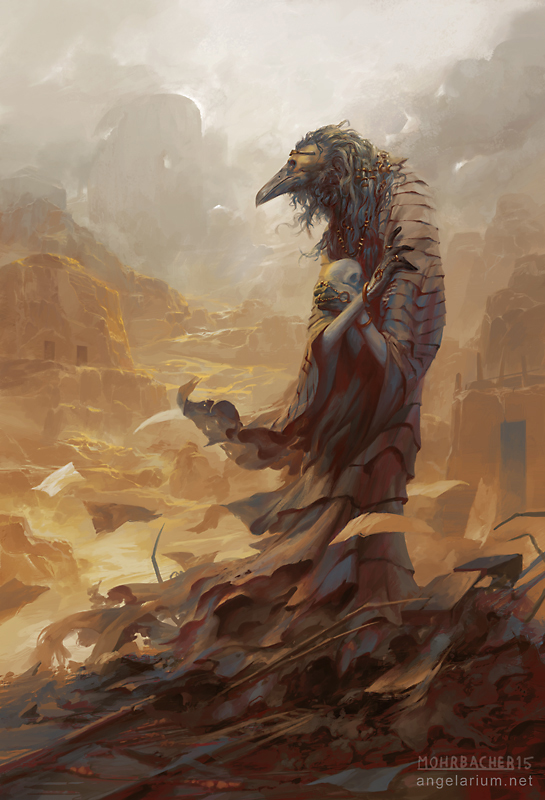
For the youngest god, son of an Archlord, Crucible melted down the fat of a maddening beast from the depths of the Shadowfell. From this sprouted a blue candle that could cleave through any darkness. It made for a great reading light, and Alentyan smiled (as best as his beaked face could) at the thoughtfulness.

If one were to give a specific gift this day, it would ideally be as close as possible to the candle described in this myth.

Seb McKinnon

Crucible 2 - Cashel

Cashel inherited the divine spheres of Earth and Water from two separate Titans, and so to this god Crucible altered fate. Before this, gold was the element of the heavens - it was found among the clouds, and hollowed from the highest peaks. Now it is found deep in the earth's belly, and sometimes floating through rivers.

The appropriate gift for this day is a monetary gift, specifically to someone of poor social standing. Most people just flick a gold piece into a beggar's hand, instead of the usual silver.

The people of Zosk revere this event. The dwarves were not nearly as big a fan of this act.

Crucible 3 - Endymeron

After the previous day's gift, Crucible thought it would be wise to give something to the dwarves - Endymeron's people. The three headed god ruled over Air and Time, and as such Endymeron's people philosophized a great deal over those two things. So, Crucible crafted the meteorite.

Stones from the sky are the subject of fierce debate among many dwarven philosophers. Philosophically, they are heretical. Practically, they contain many useful metals.

Specific gifts given this day are usually either trinkets crafted from exotic metals, long-winded essays, or anything given to a dwarf.

Crucible 4 - Graeler

Graeler rules the spheres of Empires and Mind. As such, Crucible thought it would be appropriate to create something that fit both. Something that required mental conquering.

And thus, Crucible wrote the first riddle. Graeler was, uncharacteristically, delighted.

The appropriate gift for this day is, of course, telling your friends a riddle they haven't heard before.

Crucible 5 - Haraad

As the goddess of Nature and Health, Haraad's power wanes with the seasons. Within the calendar she rules over the highest days of spring, closest to the solstice. Conversely, she is weakest in the fall, when life begins to decay and when illness commonly creeps over the populous.

To cheer her up, Crucible tinted the leaves of autumn's last days beautiful reds and oranges. Haraad smiled, a rare occurrence in the dead of winter, when this myth took place.

On this day the faithful typically give a gift to anyone in their life who is, at the time, sick. If that happens to be nobody they know, they give someone a preserved leaf from the previous fall, when the colors yet turned.

Crucible 6 - Jaspus

Fire and Home are Jaspus's spheres, and yet they have trouble co-existing. Light a fire in an enclosed space, and smoke chokes out its residents. This rule has exceptions, of course, but it troubled Jaspus. So, for him, Crucible crafted the chimney.

Jaspus nodded in approval. This was one of the most emotional acts taken by the forge-god, at least in recorded history.

The traditional gift for this day is a red cake, cooked to look like a brick. In some parts of the world, sweeping your friend's chimney is also considered traditional.

Crucible 7 - Ka

What gift do you give to a god of Magic and Chaos?

Ka was tickled by the prospect, especially when Crucible invited them over to a house in Deitia, heavenbound city of the gods. Ka relished the opportunity to topple Crucible's plans.

Then they walked in the door ajar, and a bucket of water fell on Ka's head. Each of their snorts from the resultant laughing fit birthed a slaad.

This is the day of Crucible where you play pranks on your friends.

Crucible 8 - Ouran

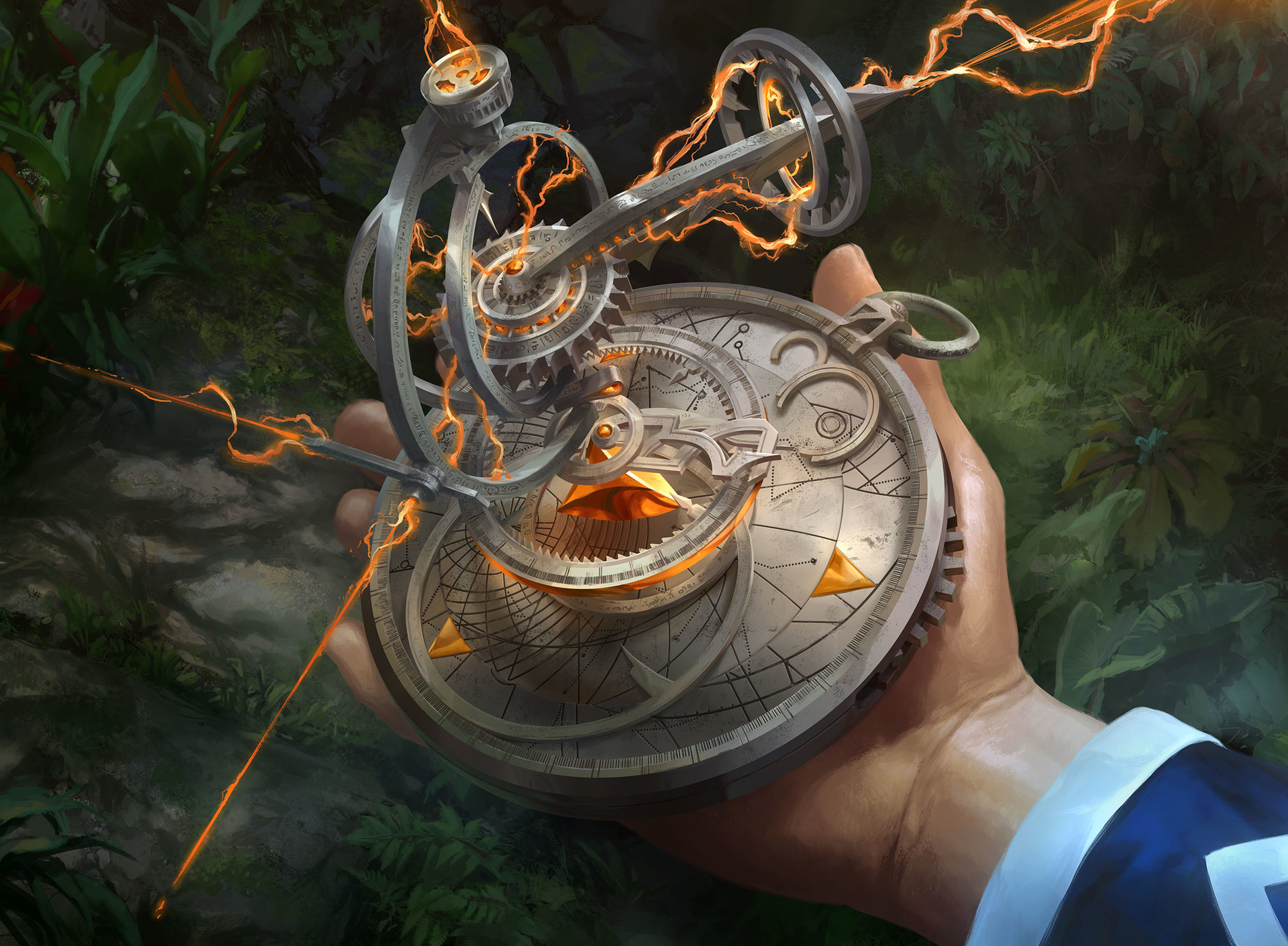
On the other hand, Crucible was very confident as to what they needed to give to Ouran. As the god of Morality and, more importantly, Invention, Crucible needed to craft something mechanical. After much thought, Crucible presented Ouran with a compass, late in the day.

A compass is the requisite gift, of course. It would be wise to make sure it's the right kind - giving someone in the eastern hemisphere one that's weighted towards the east pole won't be very helpful.

Yeong-Hao Han

Crucible 9 - Quar 

Crucible's original gift to Quar has been scrubbed from history - apparently, it was horribly offensive. Though, in a roundabout way, Crucible's apology to the god of Truth and Emotion wound up as its own gift.

On the ninth of Crucible, celebrators are supposed to give any long-overdue apologies they might have.

Crucible 10 - Sotiro

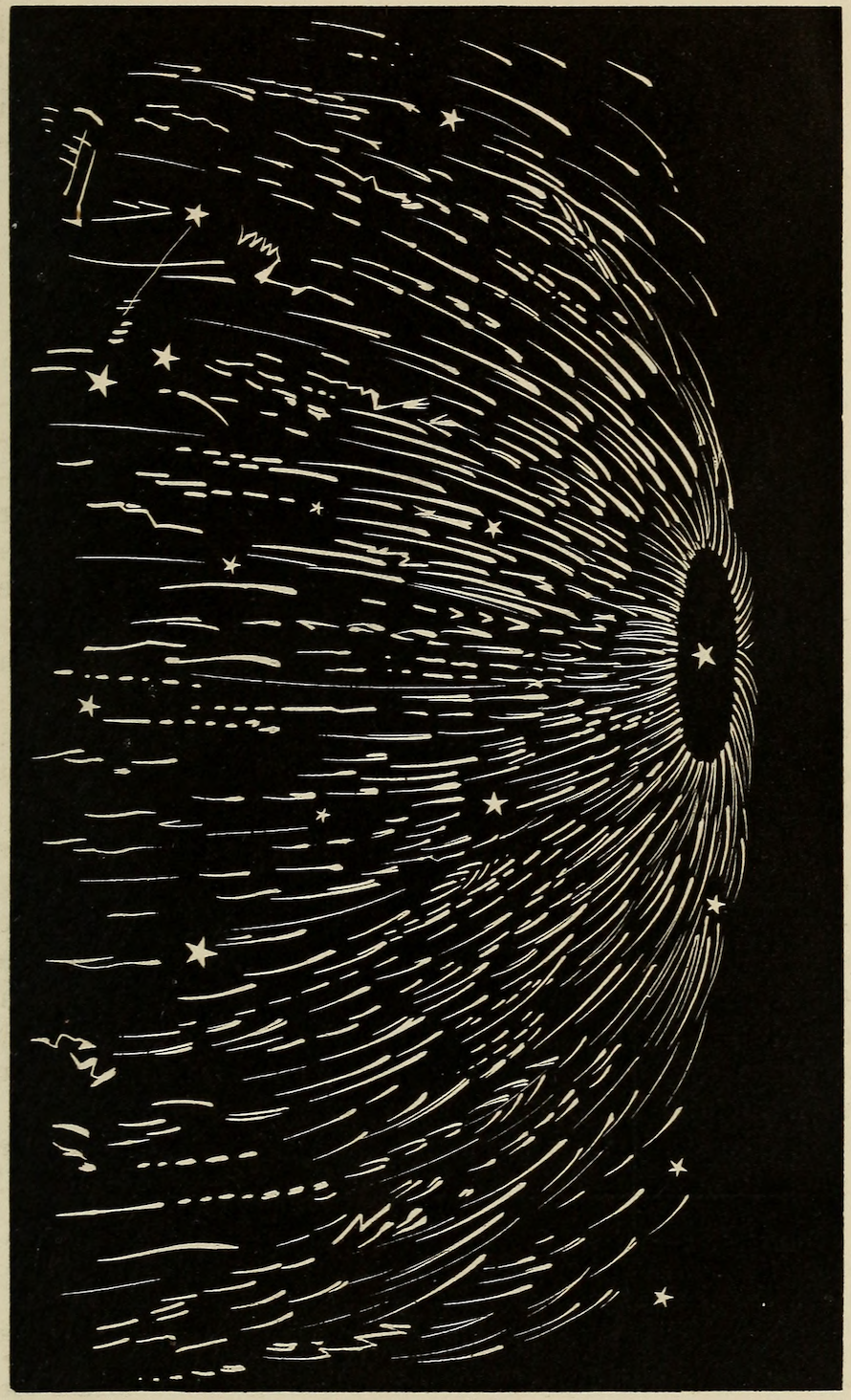
For the ruler over Stars and Travel, Crucible crafted the cloudless night - a thing that would allow all lost travelers to find their way home, or perhaps further away from it.

Crucible had to call in several favors for this gift, and as such the most appropriate thing one can do on this day is to offer help to any who may need it.

Crucible 11 - Troyt

Waking up early, Crucible flagged down the second child of the Archdragon. He wanted to show her how to create bronze - for a goddess of War and Lightning, a mainly-copper sword seemed the perfect gift. Troyt would later go on to show her followers that same process.

Bronze trinkets are, of course, the gift of choice.

Crucible 12 - Zuzen

To the dracogod of Law and Thunder, Cashel gifted a book with ever-expanding pages, and a quill with limitless ink. This was to allow him to record as many laws as he could possibly think of. Instead, Zuzen used it to record the names of each god felled during the God Purge, three centuries after when this myth took place.

This day is reserved for gifts to those in mourning.

Monday, April 15, 2019

The Deck of Circular Motion

This is the deck of cards some characters begin the game with. It is used for games of chance and spiritual readings (which can determine a person's past, present, and destiny). It is known as the Deck of Circular Motion and was popularized shortly after the Lightclaiming. The Keepers of the Sun used it to cast portents on the future of their fledgling nation. And when the Celestial Wars broke out, countless soldiers used them as a source of entertainment. They inspire self-reflection and damnation of forces beyond their control in those that use them for either purpose.

They are sponsored by the Thirteen, first and foremost. Games played and fortunes told with them are filtered through their context and influence. They do not have anything against nonbelievers, but all the same those qualities render them less susceptible to interpretation by the Deck.

Although the Deck of Circular Motion only appears in historical records after the Lightclaiming, it has always been on Loom. It is a fact of life there, much the same as gravity and the ability of prayer to bring the rains. Few ever ask where it really came from - when was the last time you pondered as to how the Earth began to rotate?


NUMBER CARDS

The number cards (and also the face cards) are not numbers. They are archetypes, unchanging facets of the stories which sustain all gods.

2: Lover. The Lover is energy, fulfillment, sustenance. It is the lowest of the cards, representing its close ties to mortal life. At its best, it is stability and happiness. At its worst, gluttony and obsession.
3: Creator. The Creator represents self-image, as it is shaped by the outside world. Its positive aspects are opportunity and epiphany. Its negative aspects are vanity and unintended harm.
4: Seeker. The Seeker is known as our mortal faults, the space upon which we have to improve. It represents experience and forward motion, but also self-neglect and stubbornness.
5: Destroyer. The Destroyer is most concerned with the inner world, and knowing one's own nature, even at the price of forsaking the outside world. It can aid in recognizing danger (specifically the "in over your head" type) and in being humble, but might also create an unhealthy fear in the self or in others - specifically, but not always, of the unknown.
6: Ruler. The Ruler seeks to establish cooperation between people and the environment. It brings the boons of vigilance and widespread peace, but at the potential costs of mental duress and unhealthy competition.
7: Warrior. The Warrior symbolizes purpose. A Warrior might mean success or courage, but it could also bear the banner of insecurity and cruelty.
8: Magician. The Magician is the herald of change, and is recognized as one of the most powerful cards for this reason (it often has special effects in stacking games, for example). It could bring with it agency, or perhaps guilt. It is also a general stand-in for change, as vague as that is.
9: Innocent. The Innocent is comfort. It provides sure-footedness and a knowledge of boundaries when invoked, but can also inflict foolhardiness or repetition.
10: Sage. The Sage is defined the eternal search for truth. It helps in the departments of awareness and clarity, but plants the seeds for doubt and paranoia.
Jack: Caregiver. The Caregiver recognizes itself as indicative of servitude. It is closely associated with likability and compassion, and is weak in the areas of righteousness and preservation.
Queen: Fool. The Fool is expressed in drinking deep, eating well, and the pursuit of pleasure. It is unaffected by impending danger, and wields the strength of emotional knowledge. It is hurt worst by understimulation and being faced with the future.
King: Orphan. We see the Orphan as good fortune. It has the most sway in hours of judgement and desperation, but cannot aid much in the everyday occurrences of social interaction and physical labor.
Ace: Conductor. The Conductor symbolizes the game itself, and the inherent paradoxes that construct it. It is both spiritual guidance and sinful entertainment. It is the lowest of the cards, and yet trumps them all. It was the one that created the game, and yet it does not exist outside its context. Seeing it in a reading is a rarity, and a sign that someone is extremely spiritually unwell. And yet it is the kingmaker in countless games of cards.

Image result for playing cards
Alonzo Fenix

SUITES

The suites are numbers. Specifically, they are the Divine Numbers - those considered holy through their connection to various pantheons present in the canon of the Thirteen.

These numbers are:
Five. This is the number of the Undead Guardians, once-mortals risen to give those faithful to them an afterlife to look forward to. In a traditional playing card deck, it would fill the space of the Hearts suite. In the context of the four elements, it is most closely associated with Earth.
Six. This is the number of the Archlords, the old gods who ruled Loom long before the arrival of the Thirteen. It fills the space of Diamonds, and its associated element is Fire.
Seven. The number of the Titans, who once opposed the Thirteen but at the same time galvanized support for them. It fills the space of Clubs, and its associated element is Water.
Thirteen. The number of the core pantheon, the saviors of Loom, and the House in the broader cosmic context of playing cards. It is, of course, Spades, and for its proximity to the heavens it is associated with air.


RULES CARD

The Rules Card exists, and does what it sounds like. One side contains the rules for spiritual readings, and the other the rules for playing cards. It depicts the Three Creators, ambiguous aspects of the universe itself that dictate morality.


WILDCARD

The Wildcard depicts a mouth, void of all things save a single white tooth. It represents a particularly unknowable deity within the mythos of Loom, the Singular Hunger. If it inexplicably appears off the top of the deck in a game of cards, it loses to everything else (despite outranking all of them). In a reading, it may invite itself as a harbinger of base needs, divine ascension, hilarity, gore, dung beetles, charity, and innortedity.

Thursday, February 21, 2019

The Shadowfell's God

Shadows

The Shadowfell was born in the time of the Archlords. It began as little more than a corner of the Astral Plane, where dreams give rise to life. Alenta, the most human of the Archlords, claimed this corner of it for himself. He would use it to enjoy his privilege as a creator god, and to deny its use from his fellows. Most of them would use it for nothing but ill.

...but he found that he could not use it. Alenta was by far the least interested in this pantheon with the business of creation, but here when he put an effort forth nothing happened. The plane writhed, contorted to avoid his attempts to create a mental progeny. It rejected him, and stayed barren. Frustrated, Alenta warded the place off from the other Archlords and abandoned it for more hopeful pursuits.

When he left it unchecked, it began to fester.

Alenta's folly was that he attempted to create life through magic. He tried a physical creation of life - to craft flesh and bone into a recognizable form. The Astral Plane does not play by such rules. It is the kingdom of dreams. The tangible has no power there. But still, residue from his efforts eventually manifested as a race known as Shadar'kai.

Another side effect of Alenta's attempts at creation were a distortion of this section of the Astral Plane's metaphysical methods. The will of an Archlord is not so easily resisted, and the plane had to change itself to overcome Alenta's primal magic. So, this section of the plane broke itself off. Going even further, it took on a niche. It would not create life from just any dreams. Exposure to Alenta's blackened machinations meant it would only accept nightmares as fuel for creation.

Millennium passed. Mortal night terrors birthed a menagerie of horrors within the Shadowfell, and where they could Shadar'kai built up their civilizations. This relationship was... unsustainable. Eventually the Shadar'kai learned of their origin, and called upon their creator god. Alenta, surprised that the territory he'd neglected had grown fruit, discovered the beasts on the plane and quickly plunged it into a civil war.

Blows were exchanged. The Shadar'kai, reunited with their god, fought against the rest of their world. Legions were slaughtered and rebuilt in days on both sides. The stalemate calcified, until the civil war was nothing more than worthless bodies being thrown at each other.

This is when the Egg hatched.

Madness

The Shadowfell has a habit of recreating locations on the Material Plane imperfectly. One such location was the Divine Womb, the birthplace of Loom's gods. The mechanics of that place are outside of the scope of this post, but thankfully the Shadowfell's distorted mirror of it function in very simple terms.

Instead of a Womb, the Shadowfell had a Divine Egg. A singular, massive embryo, holding an incubating god. Whereas Loom's gods were born from mortal hope, the Shadowfell would only release its god when the plane was completely hopeless.

Divine Wombs will give birth to a Lastborn God at the end of their planet's lifespan, but the Shadowfell contained only a Firstborn God. As opposed to being the synthesis of its planet's history, the Firstborn God would exemplify everything the Shadowfell isn't. And it would bear the visage of its greatest criminal.

The Shadowfell was a place of madness and shadows. Alenta had rendered it such when he tampered with forces he didn't understand, and then returned only to plunge it into hopeless war. And so the Divine Egg finally cracked open, giving birth to his only son: Alentyan, the god of Light and Wisdom.

Peter Mohrbacher

After this event, Alenta's interest in the civil war dwindled. He departed the Shadowfell in disgrace, and his people followed suit. They went to Vessel, one of Loom's three moons.

Alentyan left as soon as he was born. He had no purpose here. Its denizens cared not for either of his disciplines. The Material Plane was much more accommodating, and that is where he resided for thousands of years. He was a sage for those who sought him out, bringing illumination to those he deemed worthy. He lacked interest in the position of "god," but when a council of others like him sought to care for the planet in its darkest hour he found no good reason to exclude himself, and took his place among the Thirteen.

The Shadowfell stayed as it had been after Alenta left. A small group of belligerent Shadar'kai remained to continue fighting against the beasts they could take on. It produced the finest monster hunters in the planescape for generations to come. 

Dreams cannot be tamed, even by the divine. Light and wisdom will always flee from a place of shadows and madness.