Showing posts with label regions. Show all posts

Thursday, February 20, 2020

Yetkoli Government

My current game has placed my players in Silverbrine, still known to its 40% elven population as Khayit. It's a coastal city whose human inhabitants have just barely forgotten about the brief, bloody war that introduced its current colonial regime a half-century ago.

Silverbrine is a Yetkoli vassal city - while technically distinct from the Empire, it is ruled predominantly by those hailing from the imperial seat on the other side of the continent.

Specifically, as with all vassal cities, it is ruled by a Septumvirate - a council of seven who write the laws, determine their meaning, and oversee their enforcement. They have complete political and military power within their city, and are kept in line only by infighting.

There are three types of council members: Malghres, Klohres, and Vahres. (MAHL-gress, CHLO-ress, and VAH-ress respectively). Of note is that -hres means "whip" in the Yetkoli dialect of common.

The Emperor's Whip


The Malghres is a single member of the Septumvirate, appointed by the Yetkoli emperor and approved by the Imperial Legislature. Unlike all other positions within the council, it is a life sentence, barring cases where the Emperor or Legislature removes the Malghres from office.

The role of the Malghres is to serve as the will of Empire, which in many cities (none moreso than Silverbrine) is very far away. They are often appointed from the Emperor's personal friends or from military officials that ingratiate themselves to the Emperor - similar to how ambassadors function within the real-world U.S. government. They often wear ceremonial armor or carry ritual weapons into office.

It's very common for the Malghres to abstain from votes within the Septumvirate, coming in only on obviously-unanimous votes or to serve as a tiebreaker. Otherwise, the Malghres's vote is seen as one speaking for the Emperor - and perhaps even the Empire as a whole. Used lightly, that can be a very dangerous thing for everyone involved.

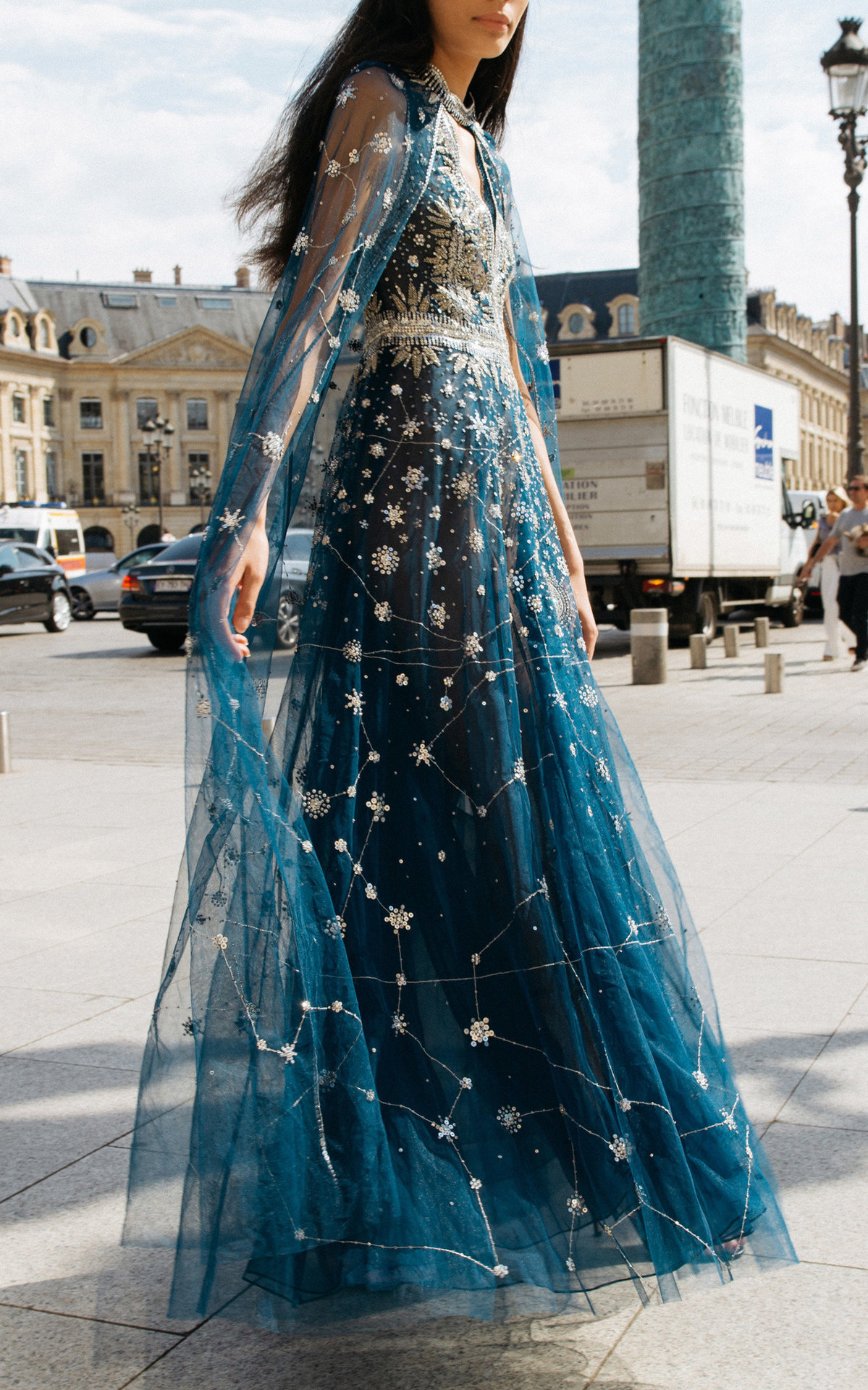
image
Micah Ulrich, Under the sign of Virgo.

The current Malghres is a woman named Daria Bhennok. A short, swarthy woman, she's rumored to have dwarven blood in her ancestry. As far as she is concerned, though, she is pure yetkoli. She has served for 28 years after distinguishing herself during a revolution under the last Emperor. She mainly abides by her role as a neutral party, but has broken her abstinence in the past for policies surrounding spiritual freedoms.

The Purse's Whip


There are three Klohreses, and they are appointed by a board of stockholders who have stake in the specific colony for which the Klohreses serve. Since the creation of the Imperial Legislature in the 1140s following the disastrous Gnoll Wars, the Emperor's budget has been out of their own hands. The Legislature decides it, in addition to having the final say on where the Emperor can declare an expansionary war.

To circumnavigate this, the Emperor began to seek out private investors who were willing to fund Colonial Venture Companies. They provide any extra money the Emperor needs to start the wars that build colonies, getting around the Legislature's financial limits on declarations of war.

In addition to having first dibs on the industry of the colonies they fund, these warmonger-stockholders are able to appoint a vassal city's Klohreses. Typically, these Septumvirate members are most concerned with matters of industry and government budgeting, usually coming from the companies owned by stockholders. Most vassal cities view them as incompetent products of nepotism, and they're mostly right.

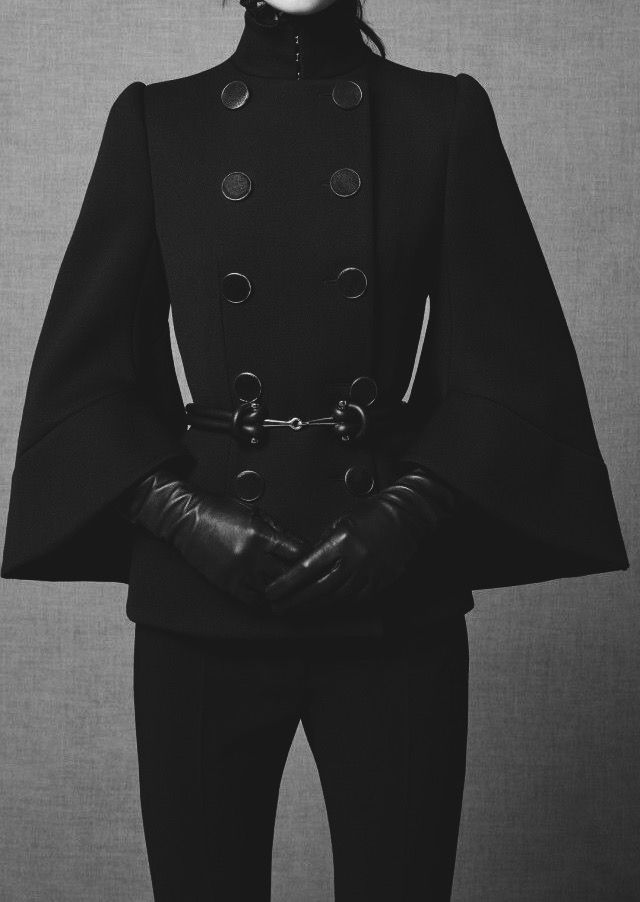
Cucculelli Shaheen

Klohreses are also known to hold fancy balls and other social events whenever they're up for re-appointment. Stockholders review their appointments every five years, taking into account their record and popularity within the city. Reappointment season happens in Crucible, after the first twelve days. Within the frame of my current game, reappointment season is coming up in a few months.

The current Klohreses are:
- Setai Merr, the daughter of a yetkoli trade baron. Setai is most well known for being the "party girl" of the Septumvirate, throwing a government-sanctioned ball almost every other month and mostly just voting in accordance with the other Klohres.
- Gardov Vestwryn, brother of a Rikolese CEO that distributes cosmetic alchemical supplies. Notably, he has been re-appointed once already, which is somewhat rare for Klohres. He's known for hard-line conservatism and prioritizing industry interests above all else.
- Lian Jowdaan, a ratfolk. They're a entrepreneur trying to expand the firearm trade into Silverbrine, appointed by a saltpetre mine owner back in the Empire. The first ratfolk to ever serve on Silverbrine's Septumvirate, and one of the few ratfolk to serve in any Septumvirate.

The People's Whip


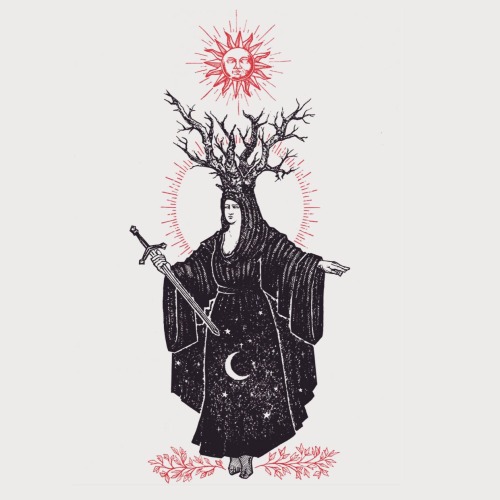
The last three members of the Septumvirate are the Vahreses. They are the only council members elected by citizens - anyone owning land gets a vote. Their terms last ten years, and they are re-elected in the month of Zuzen. The current Vahreses are in their fifth year in office.

Can't find a source beyond wearemadeofblood.tumblr.com

A Vahres typically is the one who introduces a law to the Septumvirate, as they have constituents to worry about and the most direct ties to the city. A Vahres may only ever serve one term, in order to reflect the changing values of citizens.

Laws regulating who can serve as a Vahres have changed over time - originally, only humans could serve. Right now there's some activism surrounding the removal of the landowner status, but it lacks momentum.

The current Vahreses are:
- Micchi Sabba, a wood elf. Also the first elf to serve in any Septumvirate. The campaign to have him elected was an arduous one, with the Irzmir (Silverbrine's underground revolutionary newspaper) campaigning for him constantly.
- Racha Itte, a yetkoli human campaigning on a platform of "clean politics." His supporters are mainly people who dislike the other two Vahres. He doesn't do much to address the over racism of man of his supporters.
- Chev Kastyron, a lightfoot halfling who's known for having been a poisoner ten years ago. She was inspired to get into politics after having her business shut down by the Silverbrine Reserve, and her backers mostly consist of anti-police voters.

---

sorry 'bout the long delay between posts. since i'm DMing most of my inspiration goes into planning for that. this is still pretty much planning for my current game, but it's something i feel comfortable having public.

i honestly wish this government was weirder, but there's a couple political players in my current game and i wanna keep things fairly familiar to real-world.

as always, go read anders's blog.

Tuesday, August 13, 2019

Hazzem Political Map (Pre-Shattering)

This is a post about Hazzem, the first continent I ever created for Loom and the main setting for my first longform campaign (Overlight, played from like the last day of 2016 'til mid 2018).

Overlight was a post-apocalyptic campaign, though that's somewhat of a misnomer. It wasn't a total apocalypse - there were survivors, and the "Shattering" (the apocalypse-scale event) only affected Hazzem. However, one unique thing about the continent is that (due to an ancient game being played by the fey) it's impossible to leave. Sail off from the west coast, and a mere 60 miles later you'll wash up on the eastern shore. For this reason, much of Hazzem's population believed that Hazzem was the only continent on Loom until after the Shattering.

Anyways, this is a map of Hazzem from before the events of Overlight. Specifically, it would be circa 1330 AEM. Whenever I have time for it, I'll release a map of Hazzem from after Overlight.


Here's a full-size version of this image.

A. The Yetkoli Empire is the mightiest of the human nations that remain on Hazzem after the Quartering, having forced themselves into many formerly-sovereign territories and made them either vassal nations or added them to the Empire as colonies (A2). Their culture prioritizes unification above all else, encouraging its annexed territories to embrace the teachings of Maglubiyet, their namesake and inspiration for their tyranny.

B. Only barely the third-largest of the human Empires, the Linkoli formed post-Quartering from humans who had goblin blood within them. They revere goblinoids as lucky spirits, and nobility within their aristocratic circles is based around who has the highest percentage of "pure" goblinoid blood in their family - often measured through parties designed to test the acuity of one's sense of smell. They're like wine tastings, but revolving around terrible smells (which "true" nobles are supposed to find exquisite).

C. The smallest human nation, and not truly an "empire," the Dobarkoli were refugees from the rampant slaughter of the Quartering. They are not truly expansionist, and have acquired their additional land through negotiation almost entirely. Cartography is seen as the most noble pursuit by the Dobarkoli, and they have a reputation as either the "softy" humans or the "non-imperialist" humans, depending on who you ask. Still, though, they frequent other nations for their map-making and anthropological exploits.

D. The last and second-largest human nation, the Rikolese Empire has a culture of body modification and transmutation magic. Mutations are only as taboo among them as tattoos are in our modern society - still shunned by some circles, but those who do would be considered conservative. They have a colony (D2) in the northeast where they procure cadavers from undead and seafaring races to experiment with new body modifications. Aside from this, they are known for their gothic architecture, rampant vampirism (the cause of much stigma), and spicy food.

E. Dhelkost is a vassal nation of the Yetkoli Empire, a blend of traditional orcish culture modified by human colonialism. It is kept as separate from the Empire so that it can be used as a buffer nation (mainly against Sharsvud), and because many human cities have a stigma against orcs, and would give the federal government hell for allowing them within their borders. Dhelkost has only a few cities and is largely rural. It is also in constant financial crisis - orcs don't understand the concept of a "positive" currency, having used a debt-based economy for thousands of years. Thus, they never spend their money, devaluing Dhelkost's currency into oblivion.

F. Bahkost is a largely agrarian society of orcs, with a society structured around the mastery of disciplines. After maturing to adulthood, an orc will be escorted from their communal raising home and travel to a guild to attempt to become a great artisan. Other races will sometimes, and usually begrudgingly, travel to Bahkost to study. It's also where rich people go to get fancy prosthetics, as orcs are known for being fantastic at creating them. They're known for their springtime theatrical rituals, which are essentially ancient greek Dionysian festivals.

G. Etail Noum, a society of stargazers and astronomers, is an offshoot of Bahkost. They've scavenged much from an ancient Sylvaa society that used to exist in this part of Hazzem. Though they were largely orcish at one point, they have attracted a large immigrant population - particularly halfling followers of Sotiro, the god of stars and travel. Their government is based on astrological signs, electing a leader born under the proper sign for each constellation's season.

H. Sharsvud is the name of a de-facto nation and the forest within which it is located. Another largely orcish nation, it is effectively an anarchy - the closest thing to a government is the council of High Druids, who would snort and spit black phlegm at you for calling them a government. They collectively worship a divine boar called Thousand-Pierced Yev'rott, who they believe will trample human society underfoot. There is internal squabbling about whether or not to allow worshippers of Yev'rott from other nations to live among them. Despite all this, life there is fairly peaceful, if rough-and-tumble.

I. Intihk-bel is the first of the gnoll nations, located in the highlands of the Wedgeplains. They have a noble culture, and trace their ancestry to an ancient demon-hunting society that died due to an infertility curse placed upon them. Descendants of that empire revived it centuries later, borrowing as much as was recoverable from the old ways. They are isolationist and have managed to repel imperialist human forces, but squabble with seasonal pilgrims from Sharsvud. Their aristocracy has regained the ability to reproduce naturally, and uses this as a status symbol.

J. Knoss-if'r is the other gnoll culture, who keep to the areas of the Wedgeplains beneath the escarpment that separates them from Intihk-bel. They rejected that original demon-hunting society, starting a group of nomadic societies that worship and fear nature. Unlike their northern cousins, they have been steamrolled over by the Yetkoli empire, who erected railroads through the Wedgeplains and use it for cattle drives from the west. Despite this, Knossian culture continues to survive and adapt to the strange new world they find themselves in.

K. The Havaak Bhounad is a dwarven nation dedicated to a singular purpose: protecting the Jahtulan Mountain Range from outsiders. After frequent encroaching from (mostly human) outside nations, it was established in the late 1200s to prevent the coups that plagued dwarven Hazzemite society throughout that century. Fierce and uncompromising, they also serve as an outlet for growing militaristic tendencies within dwarven youth.

L. The Kingdom of Vonnia is a halfling nation that exists as a buffer between imperialistic human societies and the rest of Hazzem, attempting to ease tensions. They are a toxicracy - their officials are chosen based on who can survive intentionally ingesting deadlier and deadlier poisons. Tenacity is the name of the game in their culture - if they should falter and fall to invasion, that could pave the way for total war in Hazzem. "Vonnia" is an incredibly poisonous flower native to the Kingdom, though that isn't known to most outsiders.

M. Located in a swamp rich in Nightsap Trees, the Dripwoods Republic is another halfling nation, famous for its production of high-quality ink. There's also a tinkering culture, and many outsiders immigrate to the swamp for tutelage under some of the brightest - or maybe just the boldest - mechanics on Hazzem. The government is also desperate to be annexed by the Kingdom of Vonnia for increased protection, but their neighbor lacks the resources to be able to properly establish themselves in the swamp.

N. Saltoff is a city-state named for its capital, a vibrant port town. It is populated mostly by bugbears, who have a maritime culture and revere the sea - a holdover from their days with the seafaring giant empire known as the Obsidian Tide. Salt is not only the namesake for the nation, but also its currency and a big influencer on its culture. Salt barons hiring assassins to kill their rivals. Divorces taking place over whether or not sea salt or pink mountain salt is better. The human empires, particularly the Rikolese, are their main customers. They also have huge domesticated war-crabs, which they use in their frequent squabbles with Zosk - who they've hated for as long as anyone can remember.

O. A primarily-hobgoblin nation, named for their founder and first philosopher-queen. She taught that precious metals (which also happen to be Zosk's primary export) are manifestations of divine purity. Coincidentally, Zosk's main river (the Okarr) is very rich in gold. Panning for it is a humble-but-respected profession, and it drives the economy. Zosk is famous for its paladin order, the Knights of the Current, who repel evil spirits from Hazzem's waterways. They are also the primary defense against Saltoff, who they've hated for as long as anyone can remember.

P. Once a colony of the dragonborn to the west, Arx Remelai ("Rising Claw" in draconic) is located in a massive canyon, supposedly made by Rimhr's talon during the Fall of the Archlords. They're a theocracy, focused on the worship of the draconic gods and populated almost entirely by kobolds. They're one of the few people who are consistently on good terms with Hazzem's dwarves, and often send out missionaries to provide humanitarian aid. Their leadership is based on a reincarnating council, the Claw's Fingers (Fetani Arx) - one for Zuzen, one for Troyt, and two for Rimhr.

Q. A vassal nation of the combined human empires, Numenion is a lawless land of extreme natural beauty. It was pretty much free for the taking when the humans showed up. Everyone else had learned to stay away from it, because it's home to a menagerie of horrifying and incredibly dangerous monsters. Only through their combined military might were the empires able to establish a nation there, and even then there have been difficulties creating many permanent settlements. A few disparate other races have also begun to populate it, seeing as they never had the opportunity to before.

R. A fierce isolationist culture of the mysterious Ghostwise halflings combined with a smaller population of firbolgs and elves, the Velikutae Forest Federation sends a message in poison-tipped arrows to any who set foot inside their woods: stay far away. Little is known of them, and ambassadors are sent out to other nations very infrequently. The Yetkoli have had their eyes on Velikutae forest for as long as they've known about it, especially since they learned that within it is an entrance to Hazzem's underdark - where anti-authoritarian elves plot coups against the empires. However, they have not yet found the resources to pursue the endeavor of invading the Federation.

S. Portwheld is a well-established culture of dragonborn who immigrated from the continent Starfyk to the west. One of the most frequent opponents for the human empires in recent days, they especially despise the empires on the basis of their insistence that Hazzem is the only continent - as they are literal descendants of people from another continent. Though their origin nation worshiped draconic gods almost exclusively, Portwheld now generally worships the Thirteen, though religion is generally lax there. They're also known for eating food that is truly, horribly disgusting to almost everyone else, because of how different dragonborn digestive systems are to mammalian ones. They have a small colony (S2) on the island of Xotam to the west, left over from when they first immigrated.

T. A small nation granted autonomy by Portwheld, Doomfall exists for the explicit purpose of welcoming new arrivals to Hazzem. Due to being sealed off from the rest of the world, Starfyk to the west will often ship their greatest prisoners eastward to their doom on the cursed continent - hence the name. They also host Hazzem's church of the Undead Guardians, a pantheon worshipped almost exclusively by adventurers. They welcome refugees, mainly meaning elves that got forced out of their desert home to the southeast by Yetkoli occupation.

U. Appearing out of nowhere very suddenly and quickly laying claim to much previously-occupied human colonies, the Aerapi Territories are ruled over from a floating island nation of gnomes - small, insectoid people related to the fey. As such, they can travel through the barrier around Hazzem unfettered, and frequently offer asylum on outside continents for those who would seek it. This infuriates the human empires, who disliked having their colonies pulled out from under their feet and dislike having their worldview questioned even more.

V. The coast of a haven for all of Hazzem's underwater races, "Selka" is the name for their land-borne penal colony. Merfolk, cecaelia, and the odd nautilid take up humble lives here as seal ranchers. Many aspiring anthropologists travel here, mainly from the Dobarkol Kingdom, to take the unique opportunity to research these elusive races. Missionaries travel for similar purposes. Both groups have little success, but they did start an interest in collecting Selkian war-snails and jewelry among the human empires.

W. Vukkral is the oldest name known for the northwestern island, and it was its name given to it by the trolls who first settled it. Refugees from the God-Titan War, the fledgling society was mercilessly crushed by the Obsidian Tide (one of the Giantine Empires) a few centuries into its lifespan. It never properly recovered, being a shadow of its former self. Despite this, its inhabitants are universally cheerful folk, who delight in meeting others. Except when they're hungry. Then they'll just eat you.

X. Ta'Galot is a recent society, comprised mainly of elves exiled from their desert homeland after being occupied by the Yetkoli Empire. However, because elves evolved in a desert, most of them are unable to survive for long in the frigid environment of Vukkral. The exceptions to the rule are the frost elves, who have a much slower metabolism. Therefore, Ta'Galot represents the largest frost elf population on Hazzem, and many have traveled to it despite not being exiled. There is no official government there, as most of the establishments are universities and research stations. However, they are provided protection by their neighboring trolls and an organized crime ring, the Navah'hken Division.

Y. An isolationist and largely undisturbed culture, Imi Xotam tends to their home island, unconcerned with the squabbling on the mainland. It is mainly populated by humans (separate from the original group that founded the Empires), but also have a small population of dwarves, elves, and dragonborn. They are primarily concerned with honoring and caring for their slumbering god, who was critically wounded during the God Purge and is said to be waiting to reawaken during Imi Xotam's hour of greatest need. They also serve as one of the best sources of knowledge on giantine culture, speaking a version of common that's closer to its root language of Giant and preserving many stories of the old Empires.

Z. The Churntide Isles are an archipelago inhabited by native ratfolk. They grant rulership on the basis of whoever is the best at repelling the sea monsters that frequent their home, naming them Reaver King - an honor held for the past decade by a pirate named Ghunyan. The Isles produce many brilliant inventions, but are known especially for making the best firearms on Hazzem, and potentially on Loom. They're also a fairly young race, worshiping the prophet who gave their society civilization and using a different calendar from most of Hazzem, which starts with their race's awakening. They frequently trade with the Havaak Bhounad, Saltoff, Zosk, and occasionally the human empires.

The grey areas are neutral territory - unclaimed by a government, or unexplored.

---

Shoutout, as always, to my fellow Loom DMs for the inspiration for much of this as well as help with occasional lore pertaining to their races. Specifically, Anders was the one who came up with the Navah'hken Division for their character's backstory. They also played in my campaign that inspired a lot of this lore, so thanks to them (as well as Griff, Magnus, Nick, and Vanya) for that!

Also thanks to Ace for helping me with some Hebrew!
Tuesday, January 8, 2019

The Sacellum's Heirarchy

After the Age of Eight Plagues, the Sacellum of Rimhrheld found itself forced into splitting its territories into two. The southern territories remained as they had been, holding onto the structure of the old church while moving into a more political, less religious age. The north, meanwhile, gained its own Pope, and was allowed to be (officially) referred to as Meltiras (its traditional, "true" name) for the first time since it was claimed.

The Sacellum of Rimhrheld

The Sacellum is in control of the southern portion of the continent. They do not preach - they worship. Four times a day, citizens are required to face towards the altar at the city's center and bow. They hold this position for ten seconds, before returning to their daily tasks. Altars are usually accompanied by a belltower to signal these times of day - an hour after sunrise, during lunch, an hour before dinner, and at sunset.

It is considered more pious to travel to the altar to worship, to light incense or candles (depending on region - candles are more common closer to the coast), and/or to perform certain rituals. These are, again, prone to regional variation, but one constant is the consumption of a grain alcohol mixed with spices known as Flaxin. For this reason, larger cities will have multiple altars, and many merchants make their livelihoods selling incense, candles, or Flaxin.

The southern Pope is usually just referred the Father (maekrix in draconic) and is descended from the bloodline of primal dragonborn, who were first blessed with holy fire by Rimhr. Maekrix is actually just a title to refer to the "father of a city," which is about equivalent to a Catholic bishop. Other maekrix will always be referred to by name, so if someone just says "The Maekrix" you know they're talking about the Pope (that word being more of a layman's term).

Technically, all maekrix are equal. In their letters, they even call the Pope athear maesinti - "holy brother" - same as all the others. But the Pope holds the power that he does thanks to his noble bloodline and his position in the Sacellum's capital, Ner Kangix.

The onureth (singular onur) are the individual communities of the faithful. They're led by the edars. Parishes and priests, essentially. But where they differ is in the jobs they perform. The Sacellum doesn't have masses. Edars perform rituals - both the calendrical ones and those which are more spontaneous, like funerals and weddings.

Those important enough within the church are given a sjach, or "shadow." They act as assistants and understudies, ready to claim the position if it winds up vacant. You would think this makes assassinations common, but with spells like speak with dead available it ensures that only the best of that bunch can kill their way to salvation.

Saints are also a thing - people who earn the privileges of a religious leader through deeds rather than hoop-jumping. They have been scarce since the days of the Plague of No Tombs, so most of them are dead. The church occasionally resurrects the ones who were potent warriors or spellcasters, but most do more work in the annals of history than they do on the ground.

There's other ranks, too, but those can come later if necessary. This is a solid groundwork for right now.

The Church Over Meltiras

The distinction between the Church and the Sacellum is clear, right down to their names. The Sacellum is all about worship - that which is holy is already known and established. You needn't become educated on it, because it's common knowledge.

The Church is different. They believe that everything should be incorporated into the church. This includes many of the pagan rituals of the local people, which have contorted to fit the constraints of the Sacellum's overseers. Under better circumstances, the rituals probably would have been squashed underfoot. But Meltiras was being settled at the same time it was being fought for, and so there was little time for inward pacification of native cultures.

One very popular tradition surviving from pre-colonial times is icon painting. This is always done on wood fresh from the trees, using paint with a manufacturing method predating the Sacellum. These are used to honor the deeds of locals, and delivered to the edar at the neighborhood altar. It's a religious honorific and a way of distributing news to the populous. The people bring in the local events, and at church every Rimhrset the edars inform their onureth what has gone on in the days hence.

The north also lacks maekrix or saints. A council of the local edars will vote on issues that pertain to a whole city, instead of leaving it up to just one person. There is still a northern Pope, and the church's Zealots fill a similar role to saints.

The Pope resides in Baryinnah, where she can have the aid of prophecy whenever necessary. She is unrivaled in her power. Meltiras's first pope was selected in 1001 A.E.M. - her name is Liberty Vii'shalor, and her relationship with the Church (not to mention the Sacellum) is outside the scale of this post. All you need to know is that she is not directly responsible for the differences between the Church and the Sacellum, but she did shirk her duty in shrinking the gap between them.

Zealots are awarded their title when their onur votes upon the greatness of their deeds - which are usually less pious than a saint's. Their miracles are bloody. If they win the support of six onureth, they are brought to Baryinnah and anointed in holy oils by the Pope. They are then awarded four servants to enable even greater deeds of holy fury.

A Zealot's Grip is both their spouse and their battlefield companion. They are sent to the affairs beneath the Zealot themself, and accompany them into larger conflicts. On the battlefield they also have the support of their Skull, a Church-sponsored tactician and general.

They also have a Throat, who handles their bureaucratic affairs. Finally, a Zealot's Faith is an edar who enforces their will and holds services specific to the follows of a certain Zealot.

A newly-chosen Zealot is allowed to recommend specific people for any of these positions, with that party's consent. Failing that, the Pope will pick the brightest of their sjachs for the job.

Saturday, December 1, 2018

Grind, the Checkerboard Moon

so as it turns out, copy-pasting google docs into blogger doesn't really... go well. i wanna play around with a solution to this issue, but right now i'd rather put out content rather than wait to put it out because i'm too busy trying to figure out how.

luckily, this post was written by hand in a notebook, and needed transcribing/finishing anyways. it's about one of the moons.

Lunar Ichor


It was discovered in 36 A.E.M. (After the Emergence of Mortals). A third moon, hiding out in the sky. Because of the black dirt coating its surface, it was invisible at night and looked like a hole in the heavens during the day. The giantine society known as the Ruby Star had a thriving scientific community, and the astronomers among them used their telescopes to confirm it as a celestial body. Because of its appearance (or lack thereof) at night, they called it the Ashamed Moon.

But dig half a foot down and Grind's soil turns bright red. Nowadays, it looks like a warped checkerboard - hence its epithet. Other titles include the Patchwork Moon (considered slightly more offensive) and the Scarred Moon (considered much more offensive, but is also the most "accurate" of the bunch). Children often remark that it reminds them of a many-eyed beast (more often than not a spider), glaring down at them. But the learned know the crimson is the ichor of a celestial body - bloody evidence of Grind's many wars.

(Sidenote: most celestial bodies in the Loomverse give birth in some way. Planets birth gods, and moons are eggs that eventually hatch into eldritch monsters. The embryo in Grind is literally bleeding.)

To the south of Starfyk there's a large island called Carnelsica. Its two main exports are high-quality steel and books detailing its rich history of knights, nobility, a indigenous demons (like how Arthurian legend has a weird amount of both Christianity and fairy shit). It's primarily inhabited by tieflings. Its main tourist attraction is the Quillatakiy - a natural teleporter pad a few miles long. Once every century, thousands of vagabonds disappear from atop its surface, replaced by refugees from Grind that clustered on their own identical Quillataiky.

New arrivals on Grind inevitably approach a marketplace on their first day there, eager to bite into the ripe red flesh of the moonfruit on display. The tiefling merchant inevitably laughs when the newcomer presses silver pieces into her hand. On Grind, everything is bought with blood. 

That's not some poetic way of talking about glory and battle, either. The tiefling returns the coins, grabs the domesticated tubeworm they use to charge customers, and asks if they prefer to be pricked in the arm or the neck.

Fiendish History


Around 10,000 years before the emergence of mortals, a myriad of events caused the Archlords (six creator gods) to descend into civil war. This was known as the Fall of the Archlords, and resulted in one of the bunch being stripped of his title (Alenta, now called the Exarch) and another being wiped from history entirely (The Fallen). One of the main aggressors in this messy business was Ose - the father of all fiends. Though he himself was a pacifist, his creations were not. So once the war was over and the reparations paid, he imposed exile on himself and his people. 

Ose and his progeny left for other planes of existence. But tieflings, while more humanoid than fiendish, were forced by stigma to vacate too - not necessarily the whole Material Plane, but at least Loom. So they used the Quillataiky (they called it something else then, but that word is lost - what we use now is the giantine name) to travel to Grind and live in relative peace. As time wore on and the Fall of the Archlords was seen less as history and more as mythos, some returned to Loom's surface and settled Carnelsica.

The tieflings who stayed, though, found a bizarre ecology. Loom's body is prone to physically blocking out the sun for long periods of time, so its basic food web starts with chemosynthesis instead of photosynthesis. Tubeworms send a long proboscis down into the earth, absorbing chemical nutrients that some helpful bacteria convert into food. Not all of them are actual worms, and some are more like sponges or coral (but don't get me wrong, there's a lot of worms).

Everything else is pretty much an arthropod. This means anything from isopods to Morrowind-style silt striders to giant horseshoe crabs (or spiders, if you swing that way). These sometimes get teleported onto Loom's surface and become really big nuisances (if they aren't crushed by the higher gravity). A lot of Carnelsican legends involve a knight slaying some kind of huge bug or worm.

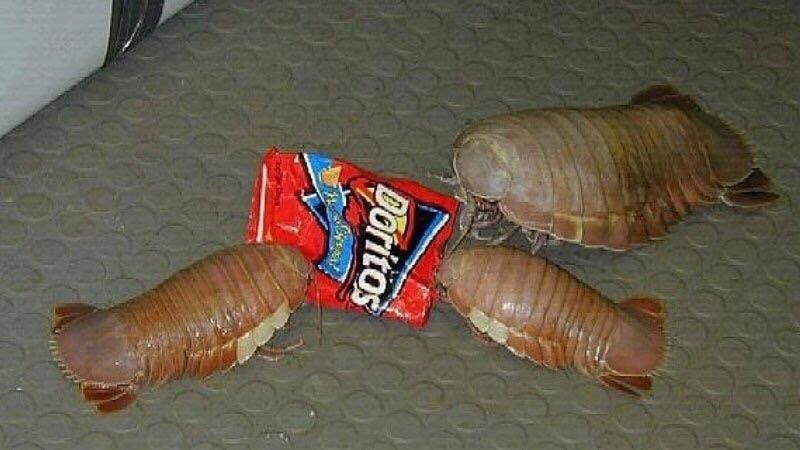
Image result for isopods with doritos
Oh yeah, and sometimes people domesticate the isopods.


This is partly why the economy is based around blood - the ecology happens to be, too. It turns out moonblood makes for a potent fuel source. And an expensive one, so mortal blood is sometimes used in its absence. There's a stock market that measures the value of different types of blood, and literal blood banks. And of course, nobody's truly broke until they've been bled dry. As it happens, the usual funeral rites on Grind involve bloodletting and then cremation. The skull is usually preserved, and the horns decorated with the same accoutrements the tiefling rocked in life (horn decoration is the foremost way of expressing yourself in most tiefling cultures).

The other reason for the predominance of sanguism is actually a philosophy held by Ose. Tieflings have a complicated relationship with their creator god, but they generally agree with a lot of what he says (while also being prone to misinterpretation). Ose often equated luxury with sin - in his eyes, nobody should thrive while there were still those who could not survive. The exact quote is something along the lines of "labor that begets only pleasure steals food from impoverished tables, water from impoverished throats, and blood from impoverished veins." It got taken a bit literally.

Source of Scars


So, eventually one of the other moons invented space travel. It is called Crest, and it's where Aasimar come from. So, naturally, when the angel-people find their neighbors are demon-people, it doesn't go well. This is further complicated when the third moon, Vessel, gets involved (it's populated by refugees from the Shadowfell and also eventually gets blown up entirely). 

The first Lunar War happens in 810 A.E.M., and there are about five more after that in the next 1,000 years. Grind is the first to get nailed with weapons of mass destruction, a trend that continues throughout the Lunar Wars. At first, it isn't that bad - the moon is living, and its "skin" (the black topsoil) can grow over the scars and mostly take care of things. But sustained orbital strike can leave more permanent scars, as can chemical weaponry (Crest was fond of the former, and Vessel utilized the latter).

So yeah, that's why the surface of Grind is so fucked up. This also means a lot of dust bowl style severe weather pretty commonly occurs, but the specifics of Loomverse atmospheres probably deserves its own post.

(Sidenote: the major advantage Grind had in the Lunar Wars was its access to Yugoloths, interstellar mercenaries from a planet a comet's throw across the solar system [known, fittingly, as Yugo]. They had an outpost on Grind and are generally on good terms with its governments.)

Practical DM Usage of All This


I'll just make a list:
  • Opinions on how fiendish tieflings should be vary, but this lets us have the best of both worlds. More mundane tieflings - just horns, weird skin color, and occasional cloven hooves or tails - come from Loom's surface. But the more hostile environment on Grind gives an excuse to have some genetic variation, i.e. way more monstrous tieflings.
  • If your players are cool enough to want to learn lore about various monsters, now you have that squared away for anything vaguely similar to an arthropod. Purple worms are pretty much tapeworms built for a moon-sized body, and I don't even know what to tell you if that isn't cool as fuck to you.
  • Going to the moon is plausible at any time period. Of course, if you want it to be round-trip you're either gonna have to strand your players on the moon for a century or resort to space travel anyways. There are probably blood-themed methods of cryogenic freezing available for player characters with shorter lifespans if you wanna go the route of the former.
  • An excuse to write rules for lower gravity. There's obviously the jumping thing, but increased carrying capacity, lowered armor restrictions, and increased range on projectiles are other options, depending on how much verisimilitude you want.
---

Credit goes to my fellow Loom DM Jodi for lore regarding the Archlords as well as telling me to write about Grind in the first place (each of the three of us are taking a different moon). She wrote a lot of the initial lore for the place (blood economy, tieflings being the prime inhabitants, Lunar Wars stuff), and this is mainly just me expanding on it. Also, I wrote most of this post to the Nuclear Throne soundtrack, which I suppose is useful if you want to run something on Grind or just want a better idea of the tone I'm going for.