Showing posts with label baryinnah. Show all posts

Friday, October 22, 2021

Textile Wizards (Worldbuilding & GLOG Class)

 History, Practically

In 1023, the first Wizard College opened up in Baryinnah. The previous 15 years were focused on cleaning up after nearly three centuries of constant plagues, leaving little time or money for loftier pursuits. Compounding this were the Sacellum's attitudes toward magic - non-divine sources of magic were already frowned upon before the Age of Eight Plagues, to say nothing of how they were treated after millions were lost to druidic magic.


But, as would increasingly become a theme for the Sacellum going forwards, economic interests began to outweigh religious prejudice. Enchanted textiles proved to be a unique commodity that could help the Sacellum pay off their enormous debt to their foreign sponsors, and the processes were already strongly established as a folk tradition in hinterland areas outside Baryinnah. 


Families living in the northern wilderness of Starfyk flocked to Baryinnah in exchange for a better life, especially after the Sacellum began seizing land for their former soldiers to farm. Most formed tight-knit communities that communally supported the small number of their own who did gain entrance to the College of Telamancy, though some wound up working within the black markets that formed around other forms of folk magic (necromancy and pyromancy, mainly).


The tradition waxed and waned for the next three and a half centuries, until Hazzem's emergence onto the global economic stage rapidly industrialized Starfyk. Telamancy tried to compete, but the College closed its doors in 1403 and largely reduced the practice to an artform. There was a resurgence of the practice among Starfyk's aristocracy in the latter half of the 1600s, resulting in the writing of Quasicotati's Codex on Telamancy, which was republished and analyzed by secondary sources for centuries to come. An original copy rests in the restricted collection of the Temple of the Elder Children during Loom's space age.


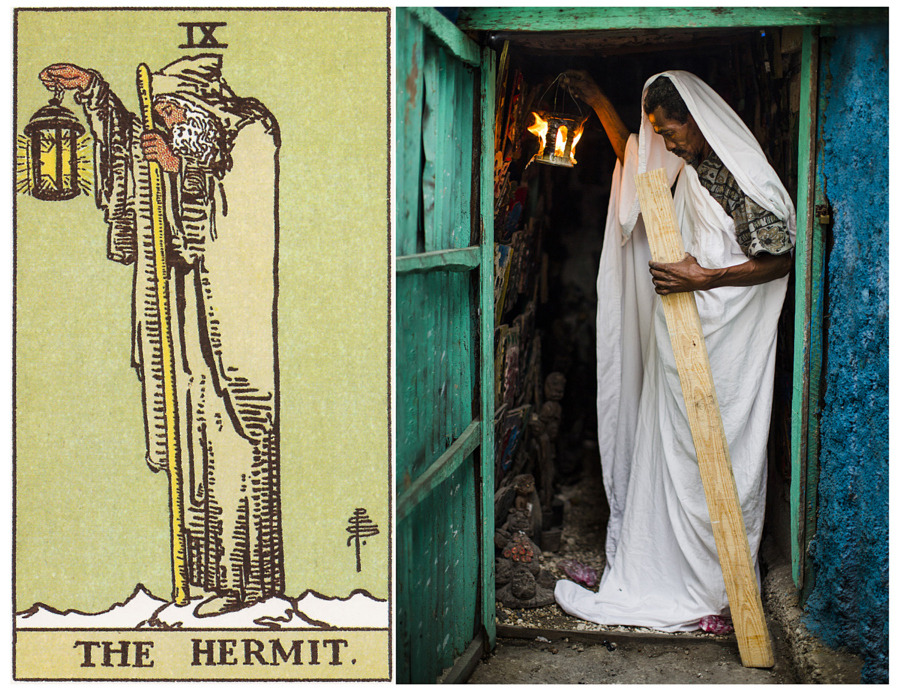
Alice Smeets and Atis Rezistans


Glog Class: Telamancer / Textile Wizard

Starting Skill [1d3] 1 = Weaving, 2 = Carpentry, 3 = Stonecarving

You begin play with a profession-appropriate weapon (sharpened knitting needles, a hammer, ect.) that deal 1d6, a burlap cloak that can also be zipped up into a durable bag, and an invoice for 25 lbs. of the raw material of clay, stone, wood, or another material that your GM approves.

MISHAPS

1. Gain 1 stress.
2. Take 1d6 damage.
3. Your Casting Dice are always expended after you roll them until the next time you take a full rest.
4. You lose your grip strength for the next 1d6 rounds, rendering you unable to hold onto objects, climb ropes, grapple creatures, ect.
5. Needles and thread materialize from a random nearby creature's hands (will always be an enemy if applicable) and hook into your skin. For the next 1d6 rounds, you cannot move and they can puppet you around on their turn as a free action. They can only move you as far as your usual movement allows. You may Save to resist moving into dangerous terrain.
6. You turn into a doll for 1d4 rounds, losing the ability to spellcast. The only weapons you can use are needles and scissors, which deal 1 damage. This lasts 1 turn longer for each Doom you've incurred from this class.

DOOMS

1. Your skin turns into cloth. You permanently take double damage from fire and slashing damage and, for the next 1d6 rounds, must choose between moving and taking an action on each of your turns.
2. Your eyes turn into buttons. You are fully blinded for the next 1d6 rounds, and after that take a permanent -4 to attack visible targets or defend yourself against visible attacks.
3. Your guts turn into stuffing. You are now fully a doll - still with a mind and soul, but no ability to use your body. This is less lethal than most Dooms, but infinitely more torturous. 

This Doom can be avoided by creating and animating your own doll-body before you fully turn. 

SPELL LIST (1D12)


1. Mending
R: 30 ft. T: Object D: Instant
Heal up to [sum] damage dealt to a single object that hasn't been completely destroyed, or reinforce an object to add [dice]x10 pounds to its weight.

2. Transpose
R: 60 ft. T: Variable D: Instant
Exchange the position of two game pieces. 1 MD can exchange objects, 2 MD people, 3 MD ogres, 4 MD houses. Unwilling targets (creatures or held objects) can Save to resist.

3. Grease
R: 60 ft. T: [dice]x10 ft. area D: [sum] rounds
Rapidly compress aetheric spirits into a puddle of flammable oil, causing creatures in the area to save or fall prone. The puddle is difficult terrain for the duration. 

4. Magician's Stitch
R: 30 ft. T: Rope, belt, ect. D: [sum] rounds
Gain control of any vaguely serpentine object for the duration. Each round of the duration, including the round of casting, can manipulate the target freely to entangle or constrict creatures (victims get a Save). Tensile strength of target remains unchanged. This spell is traditionally used to weave baskets quickly.

5. Butterfingers
R: 30 ft. T: Creature D: [sum] rounds
Each round, target must save [dice] times. For each failed save, choose one: target loses its grip on an object or creature of your choice, target trips and falls prone, or target uses a random magic item with random targets.

6. Nailgun
R: 30 ft. T: [sum] targets D: Instant
Unattended and blunt/sharp objects within the range volley towards up to [sum] target creatures, dealing [dice] damage each. Cannot target the same creature multiple times.

7. Impasse
R: Touch T: Object D: Permanent
Target object is permanently enchanted to restrict the access of certain materials. Choose up to [dice]: air, water, sand/soil, fire, projectiles. The chosen materials cannot penetrate the enchanted object, or pass through an aperture encircled by the chosen object (i.e. a basket could be enchanted to have holes but still prevent water from passing through it). Casting Impasse on an object already enchanted with Impasse overwrites the previous casting.

8. Improvised Armor
R: Touch T: Creature D: [sum] rounds
Unattended objects within range (plates, garbage can lids, ect.) encircle a creature, protecting it. It gains +[dice] AC for the duration. The creature may end this effect early to prevent [sum] damage from a single attack, throwing all of their protective objects in front of the attack.

9. Wall of Stone
R: 120 ft. D: [sum] rounds
Draw a wall on the current map that fills [sum] squares (5x[sum] cubic feet). Each section of the wall has 10x[dice] HP, and is 10 ft. high. You may use one of your squares to instead extend the height of one section of the wall by 10 ft. 

10. Flesh to Stone
R: Touch T: Creature made of flesh or object made of stone D: [sum] rounds
Target flesh becomes stone, or target stone becomes flesh, for the duration. Flesh turned to stone is petrified, unable to move and immune to everything less blunt than a sledgehammer. If the target's HD is less than or equal to [dice], the effect is permanent. Stone turned to flesh becomes useless and deeply unnerving. 1 MD affects stone tools, 2 MD affects metal, 3 MD can turn a stone wall into flesh, 4 MD will probably deeply mentally scar anyone who sees the result.

11. Animate Objects
R: 30 ft. T: Unattended objects D: [dice] hours
Up to [sum] unattended objects become non-sentient creatures for the duration. Out of combat, each object can perform labor as a very loyal toddler (willing to do whatever, but weak and generally inept). In combat, they have 1 HP, 10 AC, and deal 1 damage using your attack bonus. They all take their actions immediately following your turn.

12. God Particle
D: [dice]d20 hours
You disappear on a voyage Somewhere Else for the duration. When you return, you do so with [sum] pounds of Mysterium, a metal shaped from the god particle that can make Really Good Stuff, given a properly talented smith. [dice]x5% chance you do not return, or that something that seems very similar to you returns in your place. If cast in combat, an object is coated in Mysterium for the duration of combat, giving it +[sum] to hit and damage if it's a weapon, +[sum] to AC if it's armor, ect. [dice]x10% chance you open a portal to Somewhere Else on accident when doing this.
S.W.O.R.D. #1

Tuesday, January 8, 2019

The Sacellum's Heirarchy

After the Age of Eight Plagues, the Sacellum of Rimhrheld found itself forced into splitting its territories into two. The southern territories remained as they had been, holding onto the structure of the old church while moving into a more political, less religious age. The north, meanwhile, gained its own Pope, and was allowed to be (officially) referred to as Meltiras (its traditional, "true" name) for the first time since it was claimed.

The Sacellum of Rimhrheld

The Sacellum is in control of the southern portion of the continent. They do not preach - they worship. Four times a day, citizens are required to face towards the altar at the city's center and bow. They hold this position for ten seconds, before returning to their daily tasks. Altars are usually accompanied by a belltower to signal these times of day - an hour after sunrise, during lunch, an hour before dinner, and at sunset.

It is considered more pious to travel to the altar to worship, to light incense or candles (depending on region - candles are more common closer to the coast), and/or to perform certain rituals. These are, again, prone to regional variation, but one constant is the consumption of a grain alcohol mixed with spices known as Flaxin. For this reason, larger cities will have multiple altars, and many merchants make their livelihoods selling incense, candles, or Flaxin.

The southern Pope is usually just referred the Father (maekrix in draconic) and is descended from the bloodline of primal dragonborn, who were first blessed with holy fire by Rimhr. Maekrix is actually just a title to refer to the "father of a city," which is about equivalent to a Catholic bishop. Other maekrix will always be referred to by name, so if someone just says "The Maekrix" you know they're talking about the Pope (that word being more of a layman's term).

Technically, all maekrix are equal. In their letters, they even call the Pope athear maesinti - "holy brother" - same as all the others. But the Pope holds the power that he does thanks to his noble bloodline and his position in the Sacellum's capital, Ner Kangix.

The onureth (singular onur) are the individual communities of the faithful. They're led by the edars. Parishes and priests, essentially. But where they differ is in the jobs they perform. The Sacellum doesn't have masses. Edars perform rituals - both the calendrical ones and those which are more spontaneous, like funerals and weddings.

Those important enough within the church are given a sjach, or "shadow." They act as assistants and understudies, ready to claim the position if it winds up vacant. You would think this makes assassinations common, but with spells like speak with dead available it ensures that only the best of that bunch can kill their way to salvation.

Saints are also a thing - people who earn the privileges of a religious leader through deeds rather than hoop-jumping. They have been scarce since the days of the Plague of No Tombs, so most of them are dead. The church occasionally resurrects the ones who were potent warriors or spellcasters, but most do more work in the annals of history than they do on the ground.

There's other ranks, too, but those can come later if necessary. This is a solid groundwork for right now.

The Church Over Meltiras

The distinction between the Church and the Sacellum is clear, right down to their names. The Sacellum is all about worship - that which is holy is already known and established. You needn't become educated on it, because it's common knowledge.

The Church is different. They believe that everything should be incorporated into the church. This includes many of the pagan rituals of the local people, which have contorted to fit the constraints of the Sacellum's overseers. Under better circumstances, the rituals probably would have been squashed underfoot. But Meltiras was being settled at the same time it was being fought for, and so there was little time for inward pacification of native cultures.

One very popular tradition surviving from pre-colonial times is icon painting. This is always done on wood fresh from the trees, using paint with a manufacturing method predating the Sacellum. These are used to honor the deeds of locals, and delivered to the edar at the neighborhood altar. It's a religious honorific and a way of distributing news to the populous. The people bring in the local events, and at church every Rimhrset the edars inform their onureth what has gone on in the days hence.

The north also lacks maekrix or saints. A council of the local edars will vote on issues that pertain to a whole city, instead of leaving it up to just one person. There is still a northern Pope, and the church's Zealots fill a similar role to saints.

The Pope resides in Baryinnah, where she can have the aid of prophecy whenever necessary. She is unrivaled in her power. Meltiras's first pope was selected in 1001 A.E.M. - her name is Liberty Vii'shalor, and her relationship with the Church (not to mention the Sacellum) is outside the scale of this post. All you need to know is that she is not directly responsible for the differences between the Church and the Sacellum, but she did shirk her duty in shrinking the gap between them.

Zealots are awarded their title when their onur votes upon the greatness of their deeds - which are usually less pious than a saint's. Their miracles are bloody. If they win the support of six onureth, they are brought to Baryinnah and anointed in holy oils by the Pope. They are then awarded four servants to enable even greater deeds of holy fury.

A Zealot's Grip is both their spouse and their battlefield companion. They are sent to the affairs beneath the Zealot themself, and accompany them into larger conflicts. On the battlefield they also have the support of their Skull, a Church-sponsored tactician and general.

They also have a Throat, who handles their bureaucratic affairs. Finally, a Zealot's Faith is an edar who enforces their will and holds services specific to the follows of a certain Zealot.

A newly-chosen Zealot is allowed to recommend specific people for any of these positions, with that party's consent. Failing that, the Pope will pick the brightest of their sjachs for the job.

Monday, January 7, 2019

The Age of Eight Plagues, Part Two

Part one here.

The Plague of Drowned Dead

The year is 831, and the Plague of Vermin has almost been defeated. When their waves come, they are pitiful compared to the former deluges of pestilence that came in earlier years. The Sacellum's paladins see less and less work digging rat-proof trenches, and things seem to return to normal.

And then, people began bursting into flame.

While certainly the quickest of the plagues to take a life, Drowned Dead was toward the lower end of the bell-curve in terms of lives taken. It was another airborne disease, meaning most everyone on Starfyk had it. But the exact mechanisms that caused the infected to spontaneously combust were never discovered - it was seemingly entirely random.

Even the dead would ignite on occasion, leading to the Sacellum declaring burials at sea to be mandatory. This upset a great deal of the populous, particularly the few bugbear citizens - for whom burial at sea was a religious requirement that had been outlawed since their assimilation. Social unrest was the name of Drowned Dead's game, and while their Plague was not the most damaging in the long term - that distinction would be reserved for the Plague of No Tombs - they did pave the way for much of the success of future Plagues.

Drowned Dead was, as had become routine at this point, hunted down and killed in 842 A.E.M. This also marked when the Sacellum came into possession of the city of Baryinnah, complete with its own oracle. Though it would fall and be reclaimed several times over the span of the next few Plagues, its capture was a symbol of the Sacellum's near-domination over all of Starfyk.

The Second Plague of Vermin

God dammit.

We already know the details of how exactly a Plague of Vermin operates. This was just another instance of it, lasting from 855 to 871 A.E.M. (the Sacellum had gotten good at fighting it in the years past). What's more interesting is how exactly Vermin, the very same who had conducted the first Plague with her name, lasted this long.

If you remember, the Plague of Vermin was a sickness of the blood. This means that any animal whose blood mingled with a Vermin-bearing creature would contract it - including when they ate a patient.

Surely, not all the squirrels in the forest were slain by fire and blade. Some were eaten by the coyotes, as any other. And those coyotes fell ill with Vermin, too.

Vermin invented not just a Plague, but a method of reaching immortality. Her sentience stretched thin between a myriad of beasts, like a spiderweb. She still lurks there, in the forest. It will never be rid of her. Her blood has soaked into the soil there, and on quiet nights when the wind rustles through the trees, their leaves whisper her name.

The Plague of No Tombs

With Vermin driven back for a second time and a twenty-one year period (the longest pause between any of the Plagues) of good health after it, the Sacellum began to think the feverish night was done. Baryinnah stood tall, a beacon of the Sacellum's victory over the Alquari. Hushed at first, the whispers that the Age of Plagues had ended grew confident. There was a whole generation of children entering university that had not seen a Plague in their lifetime. Hopes were high for the future.

And in 892, they were ripped asunder.

The Plague of No Tombs was a zombie apocalypse, plain and simple. The dead did not stay buried. The whole continent was plunged into a vile period lasting over a century. No Tombs themself was never discovered - they were just one more shambling husk among the millions. Bodily fluids spread the Plague, drowning whole towns in undead bile until they were naught but an army of things that would be better off in the sepulchers.

This Plague left a huge impact on the culture of Starfyk as a whole. In the north, the tradition of canonizing great war heroes as Zealots (largely in the place of traditional saints) began. The Sacellum pioneered the Turn Undead spell as a means of crowd control. And in 988, there was a proper secession.

In that year, the patriarch of the Vath family found a way to merge the soul of an ancient Giantine Emperor with his own. This was unprecedented, and challenged the divine monopoly the Sacellum had on the continent. Seeking to rekindle his lost people, the man (if he could be called that) now known as Llipyah Vath staged a revolution.

In the already weakened state of the Sacellum, they had few free hands to contest this revolt. And so the Tenth Empire was born. They were an uneasy ally during the later days of the Plague of No Tombs - giants proved incorruptible by the disease, seeing as they were made mainly of earth and spirit.

After countless losses, the Plague was finally brought to sustainable levels in 1001 A.E.M. Baryinnah had been cleared of undead, and it was the new center of the Sacellum's power in the north. With seven Plagues behind them, the Sacellum's territories in the south and the north had come to hate each other, and separating them had become the only sustainable choice for the future.

The Plague of Black Blood

This was the last of the Plagues. It was the shortest, both in terms of turnover between the previous Plague and lifespan. It lasted from 1003 A.E.M. - a mere two years after the end of No Tombs - until 1008.

The Alquari were just as devastated by No Tombs as the rest of the continent, and a power vacuum formed among them that failed to stay full for long during the previous century. They were fighting on two fronts - the reckless Plague unleashed by a desperate High Druid and amongst themselves. Black Blood was more of a warrior than a proper druidic mage, and he was the one who ended No Tombs for them. He found himself thrust into the position of High Druid, and one who sorely needed to produce a successful Plague.

Pulling heavily from No Tombs, Black Blood also produced a blood-based disease. It thickened the blood, congealing it into a useless black sludge. It was similar to what the Sacellum had seen before, and so they were prepared to treat it once it came along. It was even somewhat of a relief compared to what they had seen in the past two centuries. Just more shivering civilians in dusty, hastily-built hospitals.

Black Blood's throat was ripped out by one of Aurdao Vihn's wardogs. With him died the Age of Plagues. These were the blackest days of the continent, bringing a surging tide of ruination upon all who walked it. The Alquari were a scattered mess, reeling from blow after blow, the most of them being self-inflicted. The Sacellum was chained in debt to its foreign sponsors, hastily carving up what little of the frontier remained to try to pay back a backbreaking price. Baryinnah still flew their banners, yes. But to the west they had a new enemy in the Tenth Empire, and their northern colonies were barely recognizable as worshipping Rimhr.

The blackest days were done, yes. But the future was not looking white, only a dour shade of gray.