Showing posts with label GLOG classes. Show all posts

Friday, October 22, 2021

Textile Wizards (Worldbuilding & GLOG Class)

 History, Practically

In 1023, the first Wizard College opened up in Baryinnah. The previous 15 years were focused on cleaning up after nearly three centuries of constant plagues, leaving little time or money for loftier pursuits. Compounding this were the Sacellum's attitudes toward magic - non-divine sources of magic were already frowned upon before the Age of Eight Plagues, to say nothing of how they were treated after millions were lost to druidic magic.


But, as would increasingly become a theme for the Sacellum going forwards, economic interests began to outweigh religious prejudice. Enchanted textiles proved to be a unique commodity that could help the Sacellum pay off their enormous debt to their foreign sponsors, and the processes were already strongly established as a folk tradition in hinterland areas outside Baryinnah. 


Families living in the northern wilderness of Starfyk flocked to Baryinnah in exchange for a better life, especially after the Sacellum began seizing land for their former soldiers to farm. Most formed tight-knit communities that communally supported the small number of their own who did gain entrance to the College of Telamancy, though some wound up working within the black markets that formed around other forms of folk magic (necromancy and pyromancy, mainly).


The tradition waxed and waned for the next three and a half centuries, until Hazzem's emergence onto the global economic stage rapidly industrialized Starfyk. Telamancy tried to compete, but the College closed its doors in 1403 and largely reduced the practice to an artform. There was a resurgence of the practice among Starfyk's aristocracy in the latter half of the 1600s, resulting in the writing of Quasicotati's Codex on Telamancy, which was republished and analyzed by secondary sources for centuries to come. An original copy rests in the restricted collection of the Temple of the Elder Children during Loom's space age.


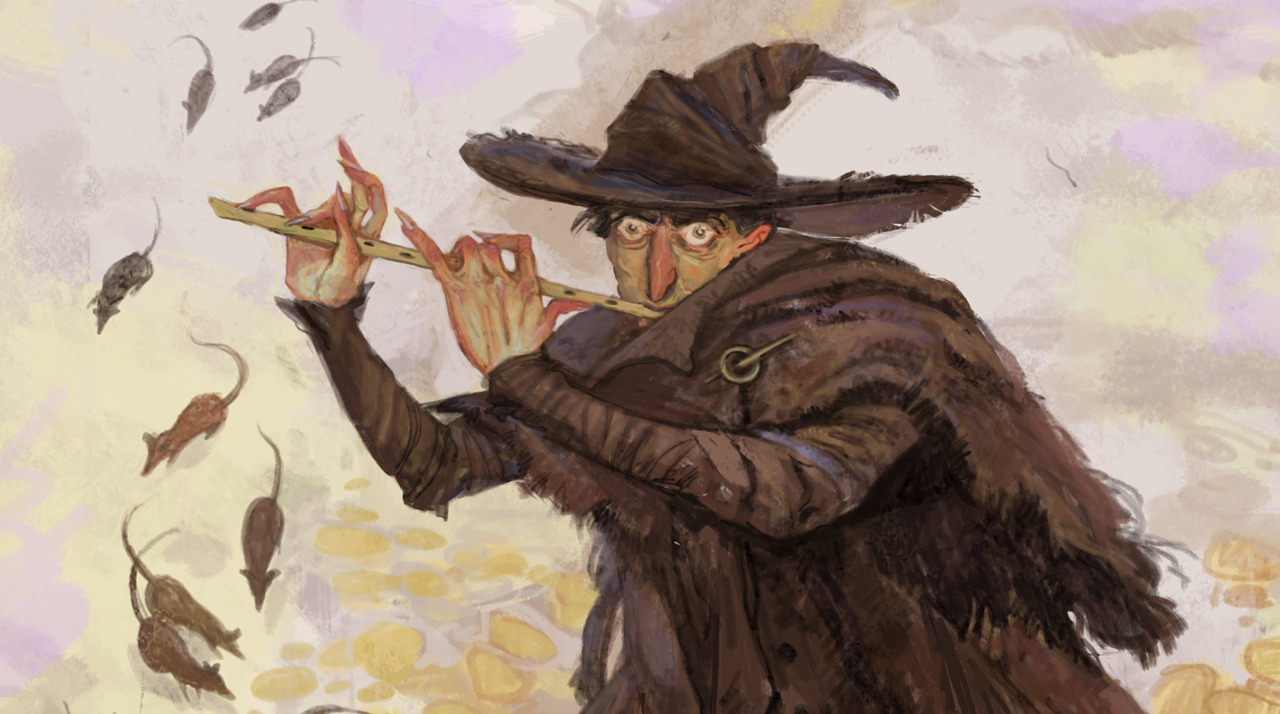
Alice Smeets and Atis Rezistans


Glog Class: Telamancer / Textile Wizard

Starting Skill [1d3] 1 = Weaving, 2 = Carpentry, 3 = Stonecarving

You begin play with a profession-appropriate weapon (sharpened knitting needles, a hammer, ect.) that deal 1d6, a burlap cloak that can also be zipped up into a durable bag, and an invoice for 25 lbs. of the raw material of clay, stone, wood, or another material that your GM approves.

MISHAPS

1. Gain 1 stress.
2. Take 1d6 damage.
3. Your Casting Dice are always expended after you roll them until the next time you take a full rest.
4. You lose your grip strength for the next 1d6 rounds, rendering you unable to hold onto objects, climb ropes, grapple creatures, ect.
5. Needles and thread materialize from a random nearby creature's hands (will always be an enemy if applicable) and hook into your skin. For the next 1d6 rounds, you cannot move and they can puppet you around on their turn as a free action. They can only move you as far as your usual movement allows. You may Save to resist moving into dangerous terrain.
6. You turn into a doll for 1d4 rounds, losing the ability to spellcast. The only weapons you can use are needles and scissors, which deal 1 damage. This lasts 1 turn longer for each Doom you've incurred from this class.

DOOMS

1. Your skin turns into cloth. You permanently take double damage from fire and slashing damage and, for the next 1d6 rounds, must choose between moving and taking an action on each of your turns.
2. Your eyes turn into buttons. You are fully blinded for the next 1d6 rounds, and after that take a permanent -4 to attack visible targets or defend yourself against visible attacks.
3. Your guts turn into stuffing. You are now fully a doll - still with a mind and soul, but no ability to use your body. This is less lethal than most Dooms, but infinitely more torturous. 

This Doom can be avoided by creating and animating your own doll-body before you fully turn. 

SPELL LIST (1D12)


1. Mending
R: 30 ft. T: Object D: Instant
Heal up to [sum] damage dealt to a single object that hasn't been completely destroyed, or reinforce an object to add [dice]x10 pounds to its weight.

2. Transpose
R: 60 ft. T: Variable D: Instant
Exchange the position of two game pieces. 1 MD can exchange objects, 2 MD people, 3 MD ogres, 4 MD houses. Unwilling targets (creatures or held objects) can Save to resist.

3. Grease
R: 60 ft. T: [dice]x10 ft. area D: [sum] rounds
Rapidly compress aetheric spirits into a puddle of flammable oil, causing creatures in the area to save or fall prone. The puddle is difficult terrain for the duration. 

4. Magician's Stitch
R: 30 ft. T: Rope, belt, ect. D: [sum] rounds
Gain control of any vaguely serpentine object for the duration. Each round of the duration, including the round of casting, can manipulate the target freely to entangle or constrict creatures (victims get a Save). Tensile strength of target remains unchanged. This spell is traditionally used to weave baskets quickly.

5. Butterfingers
R: 30 ft. T: Creature D: [sum] rounds
Each round, target must save [dice] times. For each failed save, choose one: target loses its grip on an object or creature of your choice, target trips and falls prone, or target uses a random magic item with random targets.

6. Nailgun
R: 30 ft. T: [sum] targets D: Instant
Unattended and blunt/sharp objects within the range volley towards up to [sum] target creatures, dealing [dice] damage each. Cannot target the same creature multiple times.

7. Impasse
R: Touch T: Object D: Permanent
Target object is permanently enchanted to restrict the access of certain materials. Choose up to [dice]: air, water, sand/soil, fire, projectiles. The chosen materials cannot penetrate the enchanted object, or pass through an aperture encircled by the chosen object (i.e. a basket could be enchanted to have holes but still prevent water from passing through it). Casting Impasse on an object already enchanted with Impasse overwrites the previous casting.

8. Improvised Armor
R: Touch T: Creature D: [sum] rounds
Unattended objects within range (plates, garbage can lids, ect.) encircle a creature, protecting it. It gains +[dice] AC for the duration. The creature may end this effect early to prevent [sum] damage from a single attack, throwing all of their protective objects in front of the attack.

9. Wall of Stone
R: 120 ft. D: [sum] rounds
Draw a wall on the current map that fills [sum] squares (5x[sum] cubic feet). Each section of the wall has 10x[dice] HP, and is 10 ft. high. You may use one of your squares to instead extend the height of one section of the wall by 10 ft. 

10. Flesh to Stone
R: Touch T: Creature made of flesh or object made of stone D: [sum] rounds
Target flesh becomes stone, or target stone becomes flesh, for the duration. Flesh turned to stone is petrified, unable to move and immune to everything less blunt than a sledgehammer. If the target's HD is less than or equal to [dice], the effect is permanent. Stone turned to flesh becomes useless and deeply unnerving. 1 MD affects stone tools, 2 MD affects metal, 3 MD can turn a stone wall into flesh, 4 MD will probably deeply mentally scar anyone who sees the result.

11. Animate Objects
R: 30 ft. T: Unattended objects D: [dice] hours
Up to [sum] unattended objects become non-sentient creatures for the duration. Out of combat, each object can perform labor as a very loyal toddler (willing to do whatever, but weak and generally inept). In combat, they have 1 HP, 10 AC, and deal 1 damage using your attack bonus. They all take their actions immediately following your turn.

12. God Particle
D: [dice]d20 hours
You disappear on a voyage Somewhere Else for the duration. When you return, you do so with [sum] pounds of Mysterium, a metal shaped from the god particle that can make Really Good Stuff, given a properly talented smith. [dice]x5% chance you do not return, or that something that seems very similar to you returns in your place. If cast in combat, an object is coated in Mysterium for the duration of combat, giving it +[sum] to hit and damage if it's a weapon, +[sum] to AC if it's armor, ect. [dice]x10% chance you open a portal to Somewhere Else on accident when doing this.

S.W.O.R.D. #1

Thursday, November 5, 2020

GLOG Class: Bard

The GLOG has a... strained relationship with the Bard as a class. I feel as though a lot of people I've talked to within the GLOGosphere about the class have dismissed it - I even feel as though Arnold has talked somewhere about disliking Bards, or at least thinking they work better as NPCs than players.

And, to be fair, this makes sense - D&D Bards are antithetical to a lot of the GLOG's game design. They're designed to be swiss army knives that solve problems via character sheet (high skill scores and spell usage) rather than intuition and, you know, playing the game. They also lean more heavily into roleplay than most classes, and the relationship between the GLOG and storygames is a whole different can of worms.

But, at the end of the day, I like Bards. I think every party has room for a hopeless romantic, or a weirdo anthropologist obsessed with cataloguing goblin folk songs, or even just a despicable, glittery bastard that they can shove into the door that only opens when fed someone first. And, furthermore, I think I've managed to design them to where they feel... Bard-y, and not just like a Wizard with different flavor.

You tell me how I did. 

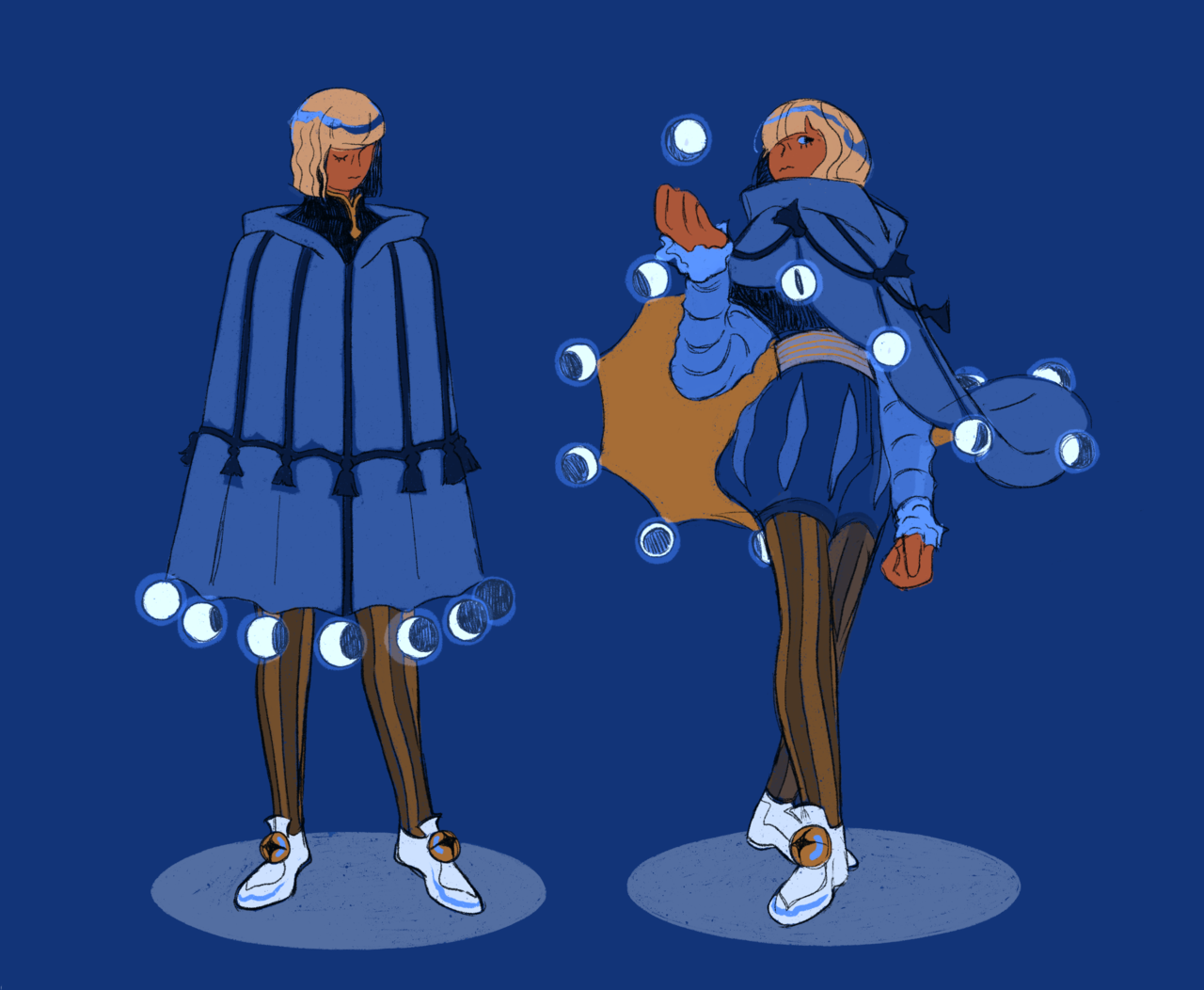
Klaus Wanderer


BARD

Each level of Bard gives you +1 Skill Slot.


A

Spellcasting, Performances

B

Familiar Melody

C

Font of Inspiration

D

Master of Ceremonies, Conductor of Reality


Starting skill [1d4]: 1 = Dancer, 2 = Musician, 3 = Singer, 4 = Satirist


You begin play with a glitter-dusted rapier (1d6), leather armor, and the tools of your trade (instruments or a harlequin's outfit, probably).


Spellcasting


Like all spellcasters, you get one spell slot per level that can hold a single spell. You do not have to prepare your spells - instead, you know 1+level Performances that you always have access to.


You also have one Casting Die per level, which are used to cast your Performances. Whenever you roll Casting Dice, dice that come up as a 1, 2, or 3 are returned to your casting pool. Rolls of 4, 5, or 6 expend the die. Spent dice return to your casting pool after a short rest.


Whenever you roll multiple dice, you may incur a Mishap if you roll two of the same number, or a Doom if you roll three of the same number. Mishaps are temporary, minor effects that make your life harder, but don't outright kill you. Dooms are more major inconveniences that can and will eventually end your career. You may only suffer a Doom three times - if you manage to survive your third and final Doom, you will never be at risk of them again.


The Mishap and Doom tables are listed after the class abilities.


Performances


To spellcast, you perform. To get the full effects of your spells, you must use your action for three consecutive turns to play music, dance, or engage in some other form of art. Regardless of the type of performance you make, your performance is split into three effects:


The Overture takes place on the first turn of performance.

The Melody takes place on the second turn of performance.

The Crescendo takes place on the third, final turn of performance.


If you take damage while performing, you must make a Will check to continue playing. If you fail this check, you must start over, but do not consume any magic dice spent.


Overture effects will only ever check the amount of dice invested into the Performance, and only Crescendo effects will check the sum of these dice. So - when you perform the Overture declare how many dice you're investing, and when you perform the Crescendo roll them.


Again, you know a number of Performances equal to 1 + your level in this class. Performances are listed at the end of this document on a 1d8 table - whenever you learn a new Performance, roll on the table. If you roll a Performance you already know, you may pick the listed Performance above or below it on the table.


Familiar Melody


As an action, you may play the Melody of one of your Performances to generate that magical effect. This does not require investing any Casting Dice, as Melody effects don't check for them.


Font of Inspiration


Before a member of your party rolls to test their skills, you may give them pointers and tidbits you've picked up in your travels or just heard in taverns. When you do, they may put a checkmark by any of their skills before they roll to test them.


Master of Ceremonies


Once per day, you may make a special Performance. This Performance can use the Overture, Melody, and Crescendo of any songs you know. For example, when you perform the Overture you might use the effect of Oafish Reverie, then use Bottled Time for your Melody on the next turn, and then finally go back to using Oafish Reverie's Crescendo on the last turn of your performance.


Conductor of Reality


Once per story arc (usually 3-5 sessions), you may Give Your Opinion on Reality. State what you would like to happen: maybe you want to ensure a certain rumor you heard about this dungeon is true, or maybe you would like to compose a new Performance with new effects on the fly. Based on what you choose, the GM will assign you a percentage chance to succeed on persuading reality, and then you roll a die (usually a d20 but a d100 will be used for hyperspecific percentages) to see if you succeed.


A Positive Light on a Negative Space by Tang Yau Hoong

MISHAPS


Whenever you roll two of the same number while casting a Performance, roll an additional 1d6 and suffer from the appropriate Mishap. It is possible to suffer from two Mishaps at once if you roll a pair of doubles while investing four Casting Dice into a spell.

  1. Gain 1 Stress.

  2. Take 1d6 damage.

  3. Your Casting Dice are always expended after you roll them until the next time you take a Full Rest.

  4. If you are a dancer, you now have two two left feet. If a non-wind musician, two left hands. If a singer or wind musician, two left lungs. This never goes away, but you get used to it after 1d6 rounds; until then you cannot cast Performances.

  5. Must spend the next 1d6 turns flirting with the most inadvisable thing in the room instead of doing anything useful. Ends early if you are successful, somehow.

  6. One of your skills is replaced with a random, different skill. 


DOOMS


The first time you roll three of the same number while casting a Performance, you suffer from your first Doom. Repeat with the second and third Dooms. 


  1. You fall into a depression for a full day, during which time you are completely unable to make art of any kind. Mechanically, you lose all your class abilities for the duration of this Doom.

  2. As above, but for a week.

  3. As above, but permanently.


One way to avoid this Doom would be to win a bet against a fey or devil in exchange for a supernatural instrument. Or maybe there's something causing this depression - or someone?


PERFORMANCE LIST (1d8)


1. Ballad of the Black Spear

Overture: For the duration of this Performance, your party gets +[dice] to hit.

Melody: You learn the lowest HP total among hostile creatures in a 30 ft. area. 

Crescendo: A black spear falls from the heavens and impales a creature of your choice, dealing [sum] damage. If this kills the creature, enemies within 30 ft. with less than [dice] HD must instantly make a morale check.

"A black tooth of Troyt falls / The young page sees her chance: / And so flee the war-thralls / Who forget their bloody chants."


2. Bottled Time

Overture: Choose [dice] adjacent creatures within 60 ft., possibly including yourself. A dome of seelie magic just large enough to cover them stretches over these creatures, preventing any harm from coming to them for the duration of this song.

Melody: You (or the creatures within your dome) may have a conversation of arbitrary length (you talk until the conversation is over) with someone within 5 ft. Time is paused for everyone else while this happens, though they don't notice it pausing.

Crescendo: The creatures within your dome are teleported to a random safe location within [sum] miles or, preferentially, the closest teleportation circle within [sum] x 10 miles.

"...the first thing that I'd like to do / is to save every day / 'til eternity passes away / just to spend them with you."


3. Dionysian Revel

Overture: Summon a [dice] HD Satyr to fight for you for the duration of this Performance. It takes its turn immediately after yours. It deals 1d6 damage and has an AC of Leather. You do not command it, but it is friendly to you and your party.

Melody: A creature in your party gets +X to hit, where X is half your level (rounded up).

Crescendo: Your summoned Satyr gets +[sum] to hit and +[sum] damage on the next attack it makes. If this kills the target, your Satyr dismembers them and then runs, shrieking, into whatever nearby best constitutes wilderness.

"M-my lord," the disguised king stammered, "have you always had horns?"


4. Glitterbomb

Overture: Creatures within a 15' cone that have [dice] or less HD are blinded for the duration of this Performance.

Melody: You blow glitter in the eyes of an adjacent creature, preventing it from making opportunity attacks until the end of its next turn.

Crescendo: All creatures within a 20 ft. area are dusted with glitter, preventing them from benefiting from invisibility and granting your allies +[sum] to hit them until the end of combat.

"Legends say that even three centuries later, retainers were picking flecks of glitter out of the royal undergarments."


5. God's Call

(this spell will make a lot more sense if you read this post on the GLOG's HP mechanics first)

Overture: Your party gets [dice] Cheer. This Cheer can exceed the usual maximum of three. If you don't finish your Performance, your mates get bummed and the bonus Cheer goes away.

Melody: Remove X Wounds from an unconscious creature within 5 ft., where X is your level in this class.

Crescendo: You and each creature in your party regain [sum] HP.

"Nobody loves me / Nobody cares / And when I'm all alone / Nobody is there." - hymn of Nobody, the No-God


6. Karaoke Superstar

Overture: You draw a crowd of 1d6 random folks plus [dice] specific people in the general area for the duration of this Performance.

Melody: Wink at a target, giving them -X to the next save they make until the end of your next turn, where X is your level in this class.

Crescendo: You charm a member of your crowd for [sum] hours - during this time they regard you as a very close friend and are willing to do you several favors until you stop giving them a reason to (or the duration ends).

"She's sleepin' with the devil, and met Jesus at an institution / She wants somebody to love - even though she can't get enough / She lives her life at the crossroads, and she hopes she dies before she ever grows old"


7. Oafish Reverie

Overture: A creature within 30 ft. and with [dice] or less Hit Dice must lose its next turn and ability to move as it collapses to the floor laughing. This effect lasts until the end of your Performance, or if it takes any damage.

Melody: Insult a creature within earshot. Until the end of its next turn, the DC to defend against that creature's attack is no longer modified by its level.

Crescendo: All creatures within 30 ft. must begin dancing if they fail a Save. They may repeat this save on their turns, and may make no other actions until they succeed on their Save or take damage. You may extend this performance for an additional [sum] turns so long as you continue performing.

"'tis quite the strange hill to die on, milord," the court jester taunted, "but at least you're dead!"


8. Silent Serenade

Overture: Your party gets +[dice] Stealth for the duration of this Performance as long as they are adjacent to you.

Melody: You throw your voice, causing it to emanate from any point within 30 ft. instead of your mouth.

Crescendo: A target you touch turns invisible for [dice] turns, or until they deal damage to a target or force them to make a save. You may continue this Performance for an additional [sum] turns.

"But the thing 'bout full bellies and purses, me lads / Is both are well easy to slit"


Bonus: Meteor Elbow Drop

Overture: You grab a creature and attempt to throw them into the air. They get a Save to resist, but if you were already grappling them they get -4 to it. If you succeed, the target is thrown [dice] x 10 feet into the air and won't land until you finish this Pro Wrestling Move.

Melody: You jump twice your normal height, or to the space above the target of your Overture if you cast this Melody as part of a performance.

Crescendo: You elbow drop an adjacent creature, dealing [sum] damage. If you're both airborne, you both crash to the ground, but only they take fall damage.


Obviously, this is indicative of the fact that you can reflavor this class as a Pro Wrestler.


Tuesday, September 8, 2020

GLOG Rules/Class: Species-Based Abilities and the Xenomonk

D&D and Race


"Race" is a pretty pervasive concept within tabletop games, both mechanically and narratively. Unsurprisingly, people love some elves in their elfgame. But D&D (in specific, though this conversation could certainly extend to many other sword-and-sorcery systems) has been catching more and more flak as of late for the colonial undertones race presents. Alignment is a particular sticking point there, but my thoughts on alignment have already been documented.

Behold Her has a great episode on decolonizing D&D, which brings this issue up from a narrative standpoint. It's a great thing for any GM to listen to, especially if you're white and worried about creating upsetting scenarios for your players of color. Thanks goes out to my friend and fellow-GM Sam for recommending this episode to me.

However, the idea of "race" still creates problems on a mechanical level. If we're just viewing this within the context of the game, I'd call it an issue of system bloat. Races have abilities because they "have to," and also to feel different. This is especially a problem in D&D, where it's created long-lasting synergies that make certain builds very common. 

Regardless of how you feel about "builds" in tabletop games, this phenomenon is antithetical to the design goal of making races "feel different." Your half-elven bard, or halfing rogue, or especially your human fighter actually feels less unique, because that's already been done so often.

And if we look at this from outside the perspective of the game, it still has a lot of colonial undertones. I was made most acutely aware of this during an anthropology class, of all things. We were looking at a chart related to the Four Humours theory, and specifically one that postulated that each "race" (really broad-scale ethnicity - people from Europe, East Asia, Africa, and Indigenous Americans) had too many of one of the humours.

As the theory went, this led each race to have certain strengths and weaknesses. Europeans were smart and creative, but overly sensitive. Meanwhile, Africans were inherently strong but also naturally lazy and less intelligent - that sort of thing.

This left a particularly bad taste in my mouth because I realized "oh, shit, this feels like I'm flipping through the PHB."

Clearly, something had to change.

Bloodborne McGee.


Tabletop and Species


Here's what I arrived at:

First off, let's not call these "races." The idea of race is a societal construction that's existed for centuries for the explicit purpose of oppressing people and justifying violence against them. Although the idea has been somewhat reclaimed in modern times - and something being a societal construction doesn't even mean it's less real - the term is especially distasteful in the context of medieval settings rife with imperialism and slavery.

Moreover, it's not very accurate. The classical drow, dwarves, and dragonborn are much closer to distinct species than genetic variations on a single type of organism. I'm sure if you were more studied than I was in biology there could be an argument here, but frankly I enjoy my science as far away as possible from my elfgames.

So, let's call them species. I know that's what I'll be doing from here on in article. I should also, again, give props to the friend that got me doing this initially - another fellow GM, Ace.

As for how to back them up mechanically, my current favorite answer is to just not do that at all. It bogs down character creation with unnecessary choices (a particular hazard for one-shots) and can quickly slip back into uncomfortable colonial-thought territory.

Of course, in some cases it just makes sense to allow stuff - yeah, of course the gnome can fit into the vent shaft, sie's small. Or, sure, the techno-person can interface with the ancient magitech computer, but can you roll me a Will save against a dormant arcanovirus? Just approach it the way Background does in LANCER - either the player or the GM can invoke a player's species to make checks easier or harder.

If you happen to be playing or designing a crunchy system, where you want the additional complexity and synergy-opportunity, just let your players start with some feats (or whatever the equivalent is). That makes it so who they are is still mechanically important, but "who they are" isn't just their genetics.

But there's "GLOG" in the title to this post, isn't there?

Goblin Arts of Gaming


Consider the next half of this post to be a very extended Joesky Tax.

For a system designed to be pick-up-and-play and with an emphasis of getting unique abilities and items outside of the normal leveling structure, the GLOG is a unique opportunity to approach species as a concept. I've yet to playtest this, but here's what I'm thinking:

Species, by default, have no real abilities. As mentioned above, there might be some invoking of species where appropriate, but there's no bonuses to ability scores or unique actions. Sure, you're an axolotlfolk or whatever, but chiefly you're a person.
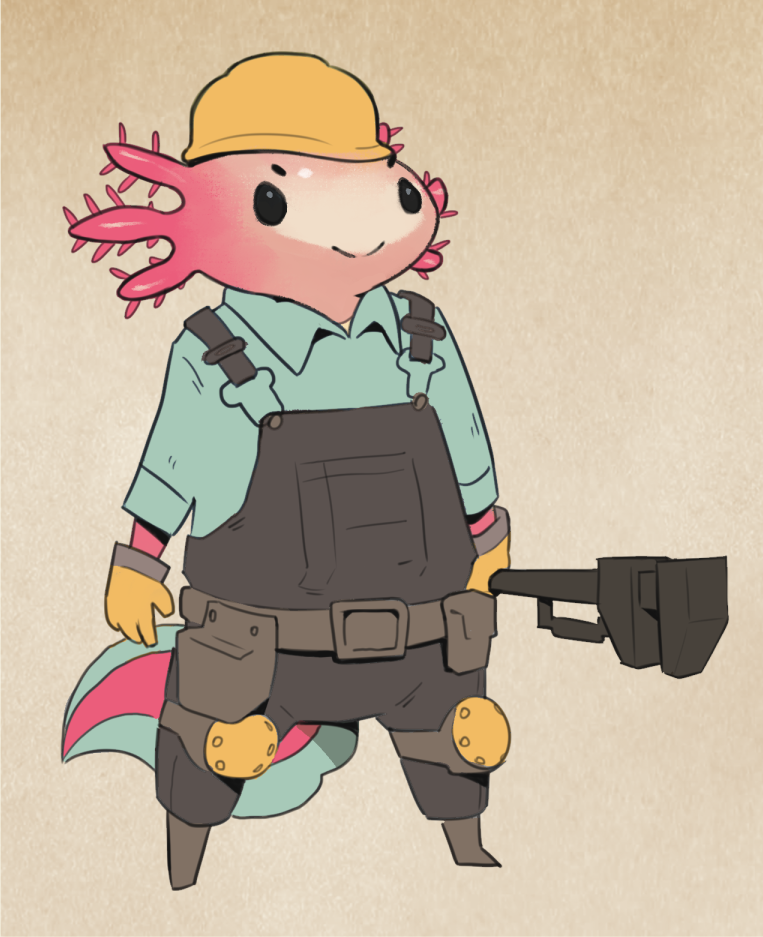
Britzmark. I originally found this image on tumblr but this artist has deleted theirs.


However, your species does still open up some unique opportunities to you. If you seek out someone who has followed this path before you, you might be able to find someone that knows a species-specific martial art.

These usually incorporate the unique biology of a species in some way or another, and will grant an ability at the expense of some sort of opportunity cost. I've written some up below, in the format of Species Ability - Training Duration - Restrictions, but adjust them to use as you see fit. And for heaven's sake, write some of your own.

Dragonborn - Voice of Rimhr
"And lo, our GodoG was once a peaceful being, who promised us sweet paradise on this earth and beyond it. But we were corrupt, and we sinned against HimiH, and we fell to bitter fratricide and enslavement. And thus, our GodoG-NameD-RimhR burned HisiH voice to ash, so that we may instead speak in a purifying flame."
Ability: As a standard action, you may breathe flame in a cone directly in front of you, dealing 1d6 damage for each level you possess (capped at 4d6) to everything in the area and lighting about half of the loose/flammable objects alight (the GM chooses based on what would be most interesting), save for half. If you use this ability again before you have had the chance to eat more of your rations and re-stabilize your inner flame (takes at least the duration of a short rest), you also take this damage. Additionally, you can always start a fire.
Training Duration: Six months, with regular practice afterwards. Dragons don't have a lot of free time.
Restrictions: Your diet must consist of primarily flammable things - mostly, lots and lots of oil. Your rations cost twice as much and are vulnerable to being destroyed when you take fire damage, like a scroll would be. Additionally, you have disadvantage on all nausea-based saves - that stuff doesn't stay down easy.

Drow - Arachnopotheosis
"We are the firstborn of Iuedaiya, and so it falls to us to uphold this community - no matter how many hands it takes."
Ability: At the beginning of your turn, you may sprout four extra arms. This grants you +4 attack and +4 inventory slots for the remainder of the combat (or, if used in less strenuous circumstances, an hour). This ability refreshes every new moon.
Training Duration: Eight weeks and access to two sets of mechanical "practice arms," which are ubiquitous in Underdark cities and basically nowhere else.
Restrictions: You have -1 attack and -1 inventory slot during the day, which you must fast through (so no consuming rations during daytime rests, either). Insects also hate you unconditionally.

If you are a human, you have a 10% chance of possessing the appropriate biology to be able to learn a species-specific fighting art. This is less a genetics thing and more to do with fleshcrafting - humans are not a naturally-occurring species, and instead have been "discovered" in multiple eras by multiple different fleshcrafters as the exact middle point between all sentient species. They're a useful base to work off of. This is also why the term "humanoid" exists.

Aside from that, the only way to learn the fighting arts of species you don't belong to is to become a Rykian Barber.

GLOG Class: The Rykian Barber (Xenomonk)


Rykian Barbers, adherents to the old god Rykus, are a usually-maligned group of monks, and so their monasteries are located primarily within the hinterlands of any given society. One of the few places where this is not the case is within Hazzem's Rikolese Empire, where practical and aesthetic fleshcrafting are deeply ingrained within the culture. Rykian Barbers are mostly nice and do the typical monk things of archiving religious texts and healing travelers for free, but if you die within their walls, your family will not get your body back.

Xenomonk A: Barber, Autocanopic
Xenomonk B: Student's Tongue, Student's Uniform
Xenomonk C: Blisternode, Rykian Conflagration
Xenomonk D: Allocanopic

Starting Skill [1d3]: 1 = Archivist, 2 = Personal Stylist, 3 = Necromancer

You begin play with an adjustable-size scalpel (1d6), burgundy robes, three doses of desiccating powder (dries and preserves organs until exposed to water), and a begging bowl.

Barber: You gain the Barber skill at rank 2. This skill can be useful to heal longer-term injuries, or even suppress spiritual or mental illness with access to the right ingredients.

Autocanopic: You may make a Barber skill check to harvest exotic organs from felled creatures. On its own, this does nothing except provide as a potential source of income (and if you've been doing this for awhile, you probably know somebody who wants monster or people bits).

However, you can also make a Will check during your downtime to sew these bits into yourself (you may gain +4 to the check if you get someone else with the Barber skill to help you). You may have a maximum number of organs transplanted this way equal to your level in this class (maximum 4). This allows you to learn fighting arts typically restricted to other species, provided you can find someone willing to teach you.

Even non-sentient species, or those considered "less civilized" (think ogres or demons) will usually have a species-specific fighting art, though finding someone to train you in it may be significantly harder (you might even have to seek out a high-level Rykian Barber to do so).
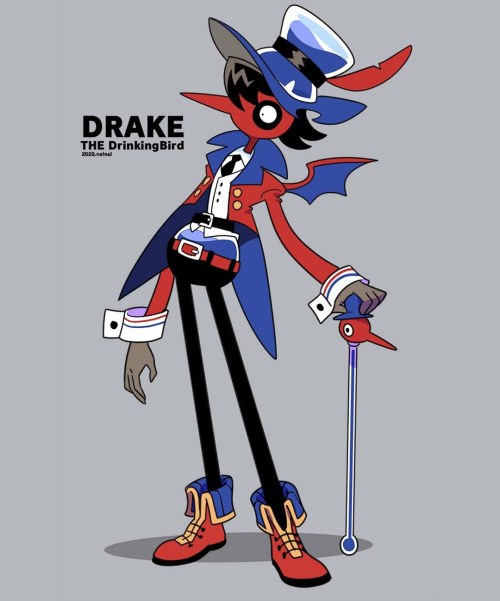
Nelnal. Obviously, Xenomonks have the capacity for incredible fashion power.


Student's Tongue: You may now use your Autocanopic ability on the tongues of other species, requiring the same Barber check to harvest and Will check to transplant. This allows you to speak the language at rank 5 - pretty much fluently, but lacking cultural context. This newfound language proficiency will only last you 24 hours, so use it wisely.

Student's Uniform: You may also use Autocanopic to masquerade as another species, which consumes the whole carcass (minus any other harvested organs). This requires a Barber check, but not a Will check (you're not transplanting anything). Again, your disguise will last 24 hours.

Sidebar: The two above abilities are primarily useful for finding a master for a species-specific fighting art, as these abilities are usually spiritual and wouldn't be shared with outsiders, if it were even (normally) possible.

Blisternode: Your extraneous organs have no more space to fit in your body, so you have installed a large "blister" in yourself to fit more. It swims under your flesh in an unsettling manner. Whenever you take damage from an attack, you may intercept it with the blister, sacrificing one of your currently-transplanted organs to reduce the damage taken by 1d6.

Feel free to change the flavor on this ability, because it's kind of fucking gross. But this whole class also is.

Rykian Conflagration: When you activate a species-specific technique, you may choose to "burn through" the organ, pushing it to the limits of its biological capabilities. This destroys the organ, deals 1d6 damage to you, and empowers the ability in some way. Work with your GM to figure out what this means - the possibilities are too wide to codify this.

If you have more samples of the organ, it is of course possible to reinstall them, and you don't have to go through the training process again if you do.

Allocanpic: Autocanopic, Student's Tongue, and Student's Uniform can now be used on other people. A non-Xenomonk person can only hold one extraneous organ (usually in place of their appendix, which is usually how they pay you for services rendered). These installations usually take around four hours each - longer than the usual self-transplant, since their bodies aren't as used to the physical trauma and need a longer recovery period.

Wimps.

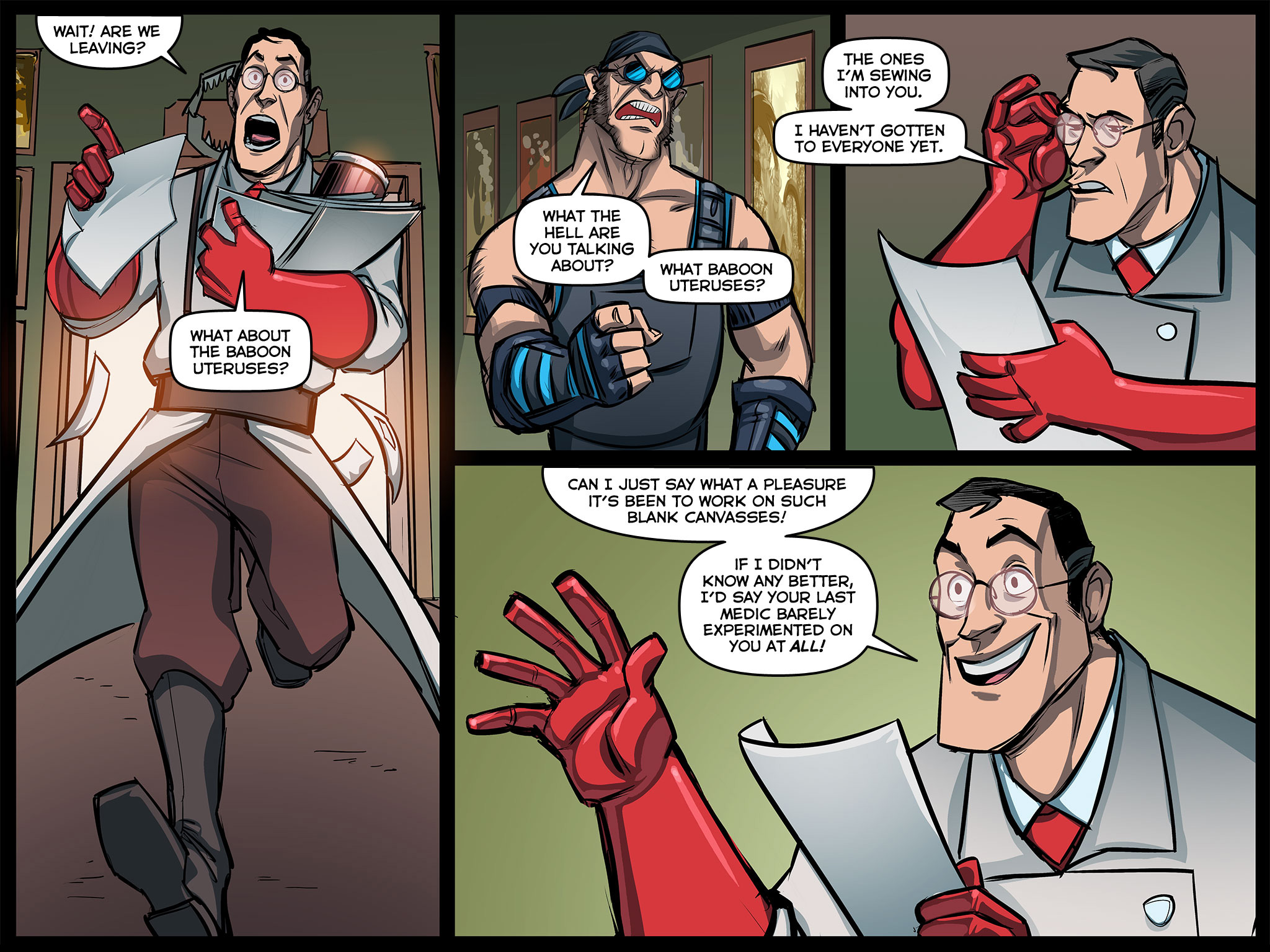
TF2 Comics. Medic is obviously a Xenomonk.


Closing Thoughts


Design-wise, this class is like a more gore-y version of the Reliquarian. Lately I've just really been enjoying designing classes that incentivize looking for a specific thing. It's what makes some of the classic classes great - Wizards keep an eye out for scrolls, Fighters keep a lookout for really good swords, and Thieves look for easy marks. It helps push player ambition and GM design space.

Big thanks to Magnus, who suggested Blisternode and Rykian Conflagration, which was what I needed to finally get off my ass and finish writing this. It's kind of brilliant - right as you start to have a lot more options in what organs you can haul around in you, you also get incentivized to give up your current ones in exchange for new ones.

And also thanks to everyone who helped me in the process of writing this, whose twitters I've included links to above. They don't really post much TTRPG content, but they have good ideas and that is worth crediting.

Finally, these rules and the Xenomonk were written in reference to my own rules for skills and stuff. They should be pretty compatible with most GLOG permutations, but I'll probably post my personal GLOGhack rules here sometime.
Sunday, May 24, 2020

GLOG Class: Reliquarian

Well, I finally bit the bullet and played a GLOG game. Unsurprisingly, it was very good.

Here's an attempt at writing my old idea for a Wizard replacement for the GLOG.

The Reliquarian


You are a magician, but before that you are a merchant. You come from some line of work that involves passing the eyes over what people deem "valuable." In your time, you've learned that they're usually wrong. Value is only wrenched from the ribcage of some horrible dungeon that's teeming with unsightly critters. 

Juanmao


Reliquarian A: Appraisal, Spellcasting, Relics
Reliquarian B: Contemporaries
Reliquarian C: +1 MD
Reliquarian D: Cabinet of Curiosities

Starting Skills [1d3]: 1 = Anthropologist, 2 = Caravaner, 3 = Gambler

You begin play with a knife, a quill with ink, and a ledger detailing your previous expenditures and business dealings. You also have one Relic from the Relic Table, determined by rolling a d4.

Appraisal: You can discern the exact value of a mundane object if you touch, smell, and taste it for one minute. If the item is either magical or of cultural value, you learn as such instead of its value.

Spellcasting: You have a pool of Magic Dice, all of which are d6s. You use these to cast spells. Whenever you cast a spell, roll any number of d6s. A result of 1-3 returns the die to your casting pool. A result of 4-6 expends the die until the next time you sleep. Some spells care about the number of [dice] invested, others care about the [sum] of all the dice you roll. 

At first level, you have one Magic Die. You may invest your Magic Dice into spell scrolls or Relics.

At higher levels, you will gain more Magic Dice. If you ever invest more than one Magic Die into a Relic, and both dice show the same number, you suffer a Mishap according to which Relic you were using.

Relics: Whenever you find money in a dungeon or get paid for doing a mission, you may replace your share of that money (1/4th of it in a party of four, 1/6th of it in a party of six, ect.) with a Relic, as rolled on the table below. Remember that money is XP - and choosing to acquire a relic does not award you XP equal to its copper/gold/whatever value.

You do the calculations for finding Relics, because the DM has enough on their mind. 

Contemporaries: You have found someone within the city of your choice that will buy your Relics. A Relic's value is determined by what fifth of the Relic Table it's on. Relics 1-4 on the list are worth 100 copper, Relics 13-16 are worth 400, that kind of thing. Obtaining money this way still doesn't gain you XP.

The first time you spend at least a week doing non-adventurous things in a new city, you will discover another Contemporary in that city.

Cabinet of Curiosities: Whenever you finish a rest, you may gift any number of people who were resting with you one of your Relics. They may now use that Relic, and gain one Magic Die that can only be used to use the specific Relic that you gave them.

If you give that Relic to another Reliquarian, they permanently gain one Magic Die. If you gift a Relic to one of your Contemporaries, they will be emboldened enough to join you as a hireling on your next mission.

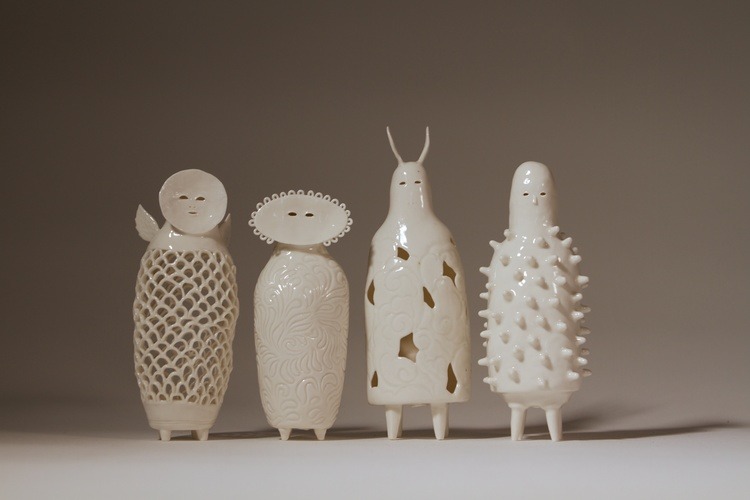
cy-lindric


THE RELIC TABLE
(For the purposes of this table, when I say "copper" I just mean the standard coinage - the equivalent of a dollar - in your setting.)

Why does Blogger lack a table function?

It might also be possible to buy these relics in a city, but the people selling them are most likely lying to you and definitely unsavory. Ask your DM.

Sophie Woodrow

1. Comb of the Imp-eror: Deal [dice] damage to any target you can see, no save. You can instead pull your hair with the comb to deal [sum] damage to your target and yourself.
2. Clam-God's Progeny: Can hold any opening closed for [sum] rounds. 
3. Tail of the First Rat: Tether two targets together (the weakest unwilling target gets a Save). Those targets cannot move more than 4-[dice] feet apart.
4. Tongue of the Mute Saint: Those that can hear you believe up to [dice] lies you speak until given reason to believe otherwise. You take [sum] damage.

5. Steel Plum: Petrify any target for [sum] rounds. Lethal if the target is a creature with HD lower than [dice]. Petrified targets are otherwise immune to all damage.
6. Antlers of a Wild God: Heal any creature [sum] HP over [dice] rounds. That creature has antlers for the duration. Hostile enemies will only target that creature for the duration, and religious folks will see this as blasphemy. 
7. Pickled Quasit: Summon a 1 HD Quasit to do your bidding for [dice] hours. Your Quasit has [sum] morale, as a hireling.
8. Petrified Dung Beetle: Summon tentacles of an unfathomable elder god to flay any target within 15 ft. for [sum] damage. If that target fails a save, they take an additional [dice] damage and fall prone. 

9. Croaking Trumpet: Summon a Belcher up to [sum]x10 feet away.
10. Shadowfell Reading Candle: Light a 20ft. area on fire for [sum] rounds. Targets and objects in the area take [dice] damage at the beginning of each of their turns, unless an action is used to put the target out. The flame is a brilliant white.
11. Knotted Rope Earring: You can create an unbreakable rope [sum]x10 feet long. It lasts for [dice] minutes.
12. Golden Monkey Head: Does nothing. Upon activation, will be seen as worth [sum]x100 copper for [dice] hours.

13. Inexplicable Dodecahedron: Target creature's fumble range increases by [sum] for [dice] rounds. 
14. Oozemonger's Flask: Turn one arm into a slimey psuedopod for [dice] rounds. You may attack with it for [sum] damage. Your attacks with this arm ignore armor. The arm is useless for anything else, except perhaps dissolving small objects. After using this Relic you may immediately make an attack with the arm. 
15. Fishman's Hat: Upon activation, you can breathe water for [dice] hours. For the duration, air-breathing strangers are violently xenophobic towards you.
16. Lonesome Bride's Veil: As long as you are not currently with other party members, hirelings, or friendly NPCs, you become invisible for [sum] rounds. The current duration shortens to [dice] rounds if you move, attack, or cast spells. 

17. Dracogod Dagger: Deal [dice] damage to a creature within 5 ft. If this kills the target, their blood crystallizes into darts and seeks out a target of your choice within 60 ft., dealing [sum] damage. If this kills the target, repeat. You do not have the option of choosing nobody. 
18. Sea God's Decanter: After activation, can summon ten gallons of saltwater every round it's uncorked. Lasts for [sum] rounds. If used to make an attack roll, it has a range of 30 ft., deals [dice] damage and pushes the target [dice]x10 feet.
19. Pixie's Anvil: Create a wall [sum]x5 feet long and [dice]x10 feet high. This wall is always five feet thick and made of ivy-choked stone. You must place the wall within 60 ft. of yourself.
20. Reading Glasses of the Royal Tutor: You may change [dice] sentences within a book of your choice to say something of roughly equivalent length. You must have a copy of the book available when casting this spell. This Relic changes the text within all copies of that book.

MISHAPS

Whenever you roll the same number twice while casting as a Reliquarian, you suffer a Mishap. The Mishap you suffer depends on the Relic you were using.

If you suffer a Mishap while using a scroll, your Magic Dice only refund on a roll of 1-2 until the next time you sleep.

1. Comb of the Imp-eror. Your hair grows to heel-length and starts grappling you. Its grappling ability is based off of your own.
2. Clam-God's Progeny. Your mouth snaps closed for [sum] rounds instead of the actual target.
3. Tail of the First Rat. You are tethered to the strongest of the two targets instead. If you are farther than the length of the tether, you are yanked towards them.
4. Tongue of the Mute Saint. You immediately say something true that negatively impacts you or your party. At best, you admit to the whole village that you can't tie your shoes, at worst you tell the bandits where the prince you're escorting is.
5. Steel Plum. Your casting arm is petrified for [sum] rounds instead of the target, becoming useless.
6. Antlers of the Wild God. You grow antlers for [dice] days. This marks you as a worshipper of a Wild God. All wise churches will spurn you.
7. Pickled Quasit. Instead summon a hostile 1 HD Quasit for [sum] rounds.
8. Petrified Dung Beetle. You are instead flayed for [sum] damage.
9. Croaking Trumpet. Summon a Belcher directly on top of yourself.
10. Shadowfell Reading Candle. You also burst into flame, taking [dice] damage at the beginning of each turn unless put out. Each turn, the flame spreads to one of your items.
11. Knotted Rope Earring. The rope is still created, but it is tied around your neck and planted firmly in the earth directly beneath you.
12. Golden Monkey Head. One random object within your inventory becomes worthless permanently. Swords will become chalk, gems will become mud.
13. Inexplicable Dodecahedron. Your fumble range expands by [sum] for [dice] rounds instead of the target's.
14. Oozemonger's Flask. You transform entirely into an ooze for [dice] rounds. You move at half speed, can't use items, and can communicate only in burps. You still deal [sum] acid damage.
15. Fishman's Hat. Water-breathing strangers are also violently xenophobic towards you.
16. Lonesome Bride's Veil. Your party forgets you exist for the duration.
17. Dracogod Dagger. Make the initial attack, but if it kills the target their crystallized blood instead targets you.
18. Sea God's Decanter. The current room fills with saltwater over the course of one round. If you aren't currently in a room, [sum] gallons of saltwater are spontaneously dumped on your head.
19. Pixie's Anvil. The wall is instead made of delicious sugar candy.
20. Reading Glasses of the Royal Tutor. The targeted sentences are instead changed to spill your greatest secret. The more sentences targeted, the greater into detail it goes.

---

Discussion


This is my first real crack at writing a GLOG class. I've yet to playtest it.

It's adapted from my old take on the Wizard from my old attempt at a homebrew system. In that system you had to buy your level-ups, but I wanted the Wizard to scale off of finding weird magic shit as opposed to levels. I always thought that was a neat idea, so I adapted it some here. The GLOG has plenty of classes that mess with XP flow already.

That's also why the Reliquarian only ever gets two MD from levels. If you want more, seek out another experienced Reliquarian, or just be content gaining power in versatility. 

If you just wanna treat this as a d20 table of magic items, that's fine too.

Also, my friend Jodi started her own blog.

UPDATE: Added Mishaps because I forgot about them. Thanks to those in the OSR Discord for suggesting the idea of each Relic having its own Mishap, and thanks to Numbers Aren't Real for writing the first few to help kick-start that process.
UPDATE, AGAIN: Thanks to Arnold K. for recommending more interesting Mishaps.